




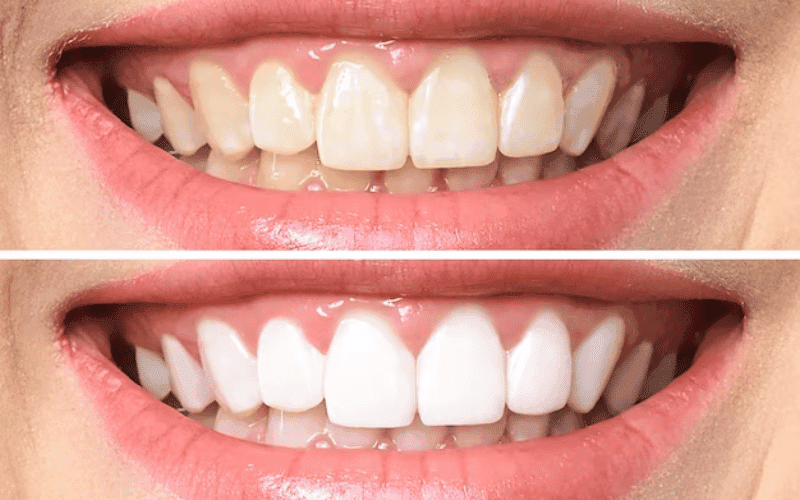
The common belief that yellow teeth are stronger than white teeth stems from a misunderstanding of tooth anatomy, specifically the relationship between the visible outer enamel and the underlying dentin. While it is true that a deeper, more yellow hue often indicates thicker, denser dentin, which can contribute to tooth resilience, tooth color itself is not the primary determinant of strength. The true measure of a tooth’s integrity is the health and thickness of its protective enamel layer. Healthy teeth naturally have a slight yellow-white color due to the visible dentin, but excessive yellowing is typically caused by surface stains and enamel erosion, signaling a potential need for improved oral hygiene or professional teeth whitening treatment.
Tooth Color: What It Really Means (Quick Guide)
| Tooth Color Appearance | Primary Cause | Implication for Strength | Recommended Action |
| Slight Yellow-White | Thick Dentin visible through translucent Enamel. | Good Strength. Indicates healthy, dense dentin. | Routine check-ups and maintenance. |
| Dark Yellow/Brown | Heavy external staining (coffee, smoking, red wine) or severe enamel erosion. | Variable. Stains don’t affect strength, but erosion indicates weakness. | Professional teeth whitening or hygiene cleaning. |
| Gray/Blue Hue | Internal factors; often aging, dentin thinning, or previous trauma/medication (e.g., tetracycline). | Potentially Weaker. May indicate internal damage or dying pulp. | Consultation with a dentist for veneers or internal bleaching. |
| Brilliant, Artificial White | Achieved through cosmetic treatments (Veneers or intense bleaching). | Strength is determined by the natural tooth structure or the strength of the restorative material. | Maintenance of veneers or continued professional care. |
Tooth Color: What It Really Means
The color of your teeth is determined by a combination of genetics, age, and lifestyle factors. Contrary to marketing myths, teeth are not naturally paper-white. They exist on a spectrum of light gray, yellow, and brown tones. The perception of your tooth color is entirely governed by how light interacts with the two primary layers of the tooth: the enamel and the dentin. Understanding these layers is essential to separating fact from fiction regarding tooth strength.
What Are Tooth Layers?
To understand why a yellow hue might correlate with strength, we must look at the physical composition of the tooth:
1. Enamel (The White Layer)
- Location: The outermost, protective layer of the tooth, visible above the gum line.
- Composition: The hardest substance in the human body, highly mineralized, and largely translucent or slightly blue-white.
- Function: Its primary role is to protect the underlying dentin from decay, wear, and temperature changes. Tooth strength is dependent on the thickness and health of this layer.
- Color Contribution: Since enamel is translucent, it allows the color of the layer beneath it to show through.
2. Dentin (The Yellow Layer)
- Location: The layer beneath the enamel, forming the bulk of the tooth structure.
- Composition: Less mineralized and softer than enamel, with microscopic tubules that lead to the pulp (nerve).
- Function: Provides the primary mechanical bulk and resilience of the tooth.
- Color Contribution: Dentin is naturally a darker, yellowish color. When the enamel layer is thin or translucent, this natural yellow color becomes more pronounced.
Are yellow teeth stronger than white teeth?
The statement “yellow teeth are stronger than white teeth” is an oversimplification, but it contains a kernel of truth based on tooth anatomy.
- The Yellow Hue is Dentin: The yellow color originates from the dentin. If the dentin is dense and thick, it creates a darker yellow background.
- Enamel Thickness: The appearance of this yellow hue means the overlying enamel layer is healthy and translucent. In some cases, genetically thicker dentin simply shines through the enamel, signaling a resilient tooth structure.
- The Misconception: The misconception arises when comparing natural, slightly yellow teeth (where the natural, strong dentin is visible) with unnaturally, artificially white teeth achieved by aggressive cosmetic procedures that might have thinned the enamel or relied solely on bleaching.
- Conclusion: Naturally slightly yellow teeth are often indicators of strong teeth with thick, healthy dentin and robust enamel. However, a dark, stained yellow is not a sign of strength; it’s a sign of neglected hygiene or erosion.
What Causes My Teeth to Turn Yellow?
While genetics play a role in natural tooth color, most patients seeking teeth whitening treatment are dealing with acquired discoloration. Understanding the causes is the first step toward effective treatment.
1. Extrinsic Stains (External)
These stains accumulate on the surface of the enamel and are the easiest to treat with teeth whitening:
- Diet: Frequent consumption of dark liquids like coffee, tea, red wine, and cola.
- Tobacco: Smoking or chewing tobacco causes persistent brown and yellow staining.
- Poor Hygiene: Inadequate brushing allows plaque and staining particles to adhere to the enamel surface.
2. Intrinsic Stains (Internal)
These stains occur within the tooth structure (dentin) and are much harder to remove with conventional teeth whitening alone:
- Age: As people age, the enamel naturally thins, making the underlying, naturally yellow dentin more visible. Simultaneously, the dentin darkens over time.
- Trauma: A severe blow to the tooth can cause internal bleeding and changes, resulting in a permanent gray or dark hue.
- Medication: Certain antibiotics (especially tetracycline) taken during tooth development can cause permanent, dark gray/blue staining within the dentin.
Teeth Whitening Treatment
For those whose yellowing is due to surface stains or whose natural tooth color simply isn’t white enough, modern teeth whitening treatment offers highly effective, safe solutions.
The two main categories of treatment are professional in-clinic options and take-home systems.
Professional in Clinic Teeth Whitening Treatment
This is the fastest and most effective way to achieve noticeable teeth whitening results, often preferred by patients seeking a dramatic change quickly.
- Procedure: A high-concentration hydrogen peroxide or carbamide peroxide gel is applied to the teeth. The gums are carefully protected. A specialized light (often LED or laser) may be used to accelerate the chemical reaction of the whitening gel.
- Benefits:
- Speed: Results are visible in a single, one-hour session.
- Safety: Performed by a dental professional, ensuring protection of gums and minimizing sensitivity.
- Effectiveness: Capable of lifting stains several shades deeper than over-the-counter options.
Veneers (Hollywood Smile)
For severe intrinsic discoloration (tetracycline stains, deep graying) or cases where the patient desires a complete change in tooth shape and alignment, veneers are the gold standard for achieving a perfectly white and symmetrical Hollywood Smile.
- Veneers are thin, custom-made shells (usually porcelain, like E-max) that are permanently bonded to the front surface of the teeth.
- Advantage Over Whitening: Veneers provide total control over the tooth color (achieving any shade of white, regardless of the original color) as well as the shape, size, and alignment of the teeth. This is a permanent cosmetic solution.
Whitening Trays and Gels
Take-home teeth whitening systems are excellent for maintenance or for patients seeking gradual results at home.
- Procedure: Custom-fitted whitening trays are created by the dentist based on a mold of the patient’s teeth. The patient applies a lower-concentration peroxide whitening gel into the trays and wears them for a prescribed time daily (usually 30 minutes to a few hours) over 1-2 weeks.
- Advantage: More affordable than in-clinic treatment and allows the patient to control the pace of the whitening process. The custom fit ensures the whitening gel is evenly distributed and effective.
Contact Dr. Wonder Clinic: Let Us Help You Achieve Your Perfect Smile
Whether your slightly yellow teeth are a sign of natural strength, or your discoloration is due to external factors, the experts at Dr. Wonder Clinic can provide a precise diagnosis and tailored solution. We specialize in advanced teeth whitening treatment and comprehensive Hollywood Smile makeovers using premium veneers and state-of-the-art technology.
Our services include:
- Detailed analysis of your enamel and dentin structure using 3D imaging.
- In-clinic Professional Teeth Whitening for maximum impact.
- Custom-designed Veneers for permanent, brilliant white perfection.
- Custom-fitted Whitening Trays and Gels for safe home maintenance.
Don’t let myths about tooth color dictate your confidence. Dr. Wonder Clinic is here to ensure your teeth are both beautiful and structurally sound.
Would you like to see a comparison table detailing the cost and longevity of Veneers versus Professional Teeth Whitening?