



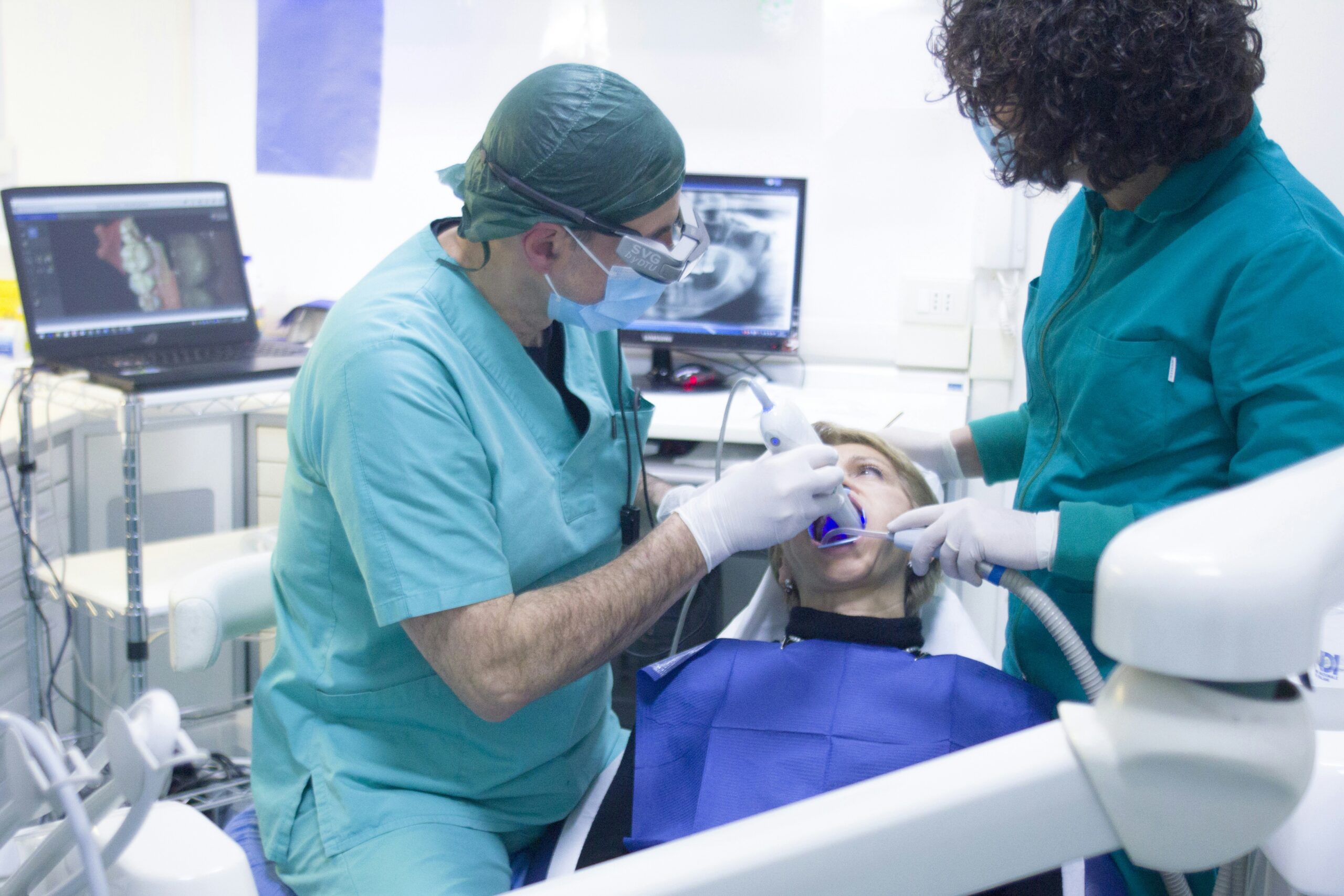
Dental implants in Turkey cost £1,000–£2,500 per tooth compared to £2,500–£5,000 in the UK — a saving of 50–70% for the same procedure using the same internationally certified implant brands. The price difference is not a quality difference. Turkey’s lower costs are driven by lower operating expenses, not lower standards. Over 15 million patients travelled to Turkey for dental treatment in 2025, with Istanbul ranking as Europe’s top dental tourism destination for the third consecutive year.
Key Takeaways
- Single implant cost in Turkey: £1,000–£2,500 vs £2,500–£5,000 in the UK
- Full mouth implants in Turkey: £6,000–£15,000 vs £25,000–£50,000 in the UK
- Turkey uses the same Nobel Biocare, Straumann, and Zimmer Biomet implant brands as UK clinics
- Treatment time: Most procedures completed in 3–7 days in Istanbul
- Accredited Istanbul clinics operate under Turkish Ministry of Health regulations with internationally comparable standards
- The language barrier is minimal — leading Istanbul clinics have English-speaking staff and patient coordinators
- NHS waiting times for implant assessment can exceed 12 months; Turkish clinics typically see patients within 48 hours
Why Are Dental Implants So Much Cheaper in Turkey?
This is the first question every patient asks and it deserves a direct, honest answer.
The cost difference between Turkey and the UK comes down to economics, not quality.
Lower operating costs: Clinic rent, utilities, and equipment maintenance cost significantly less in Istanbul than in London or Manchester. A state-of-the-art dental clinic in Istanbul operates at roughly 30–40% of the overhead of an equivalent UK facility.
Lower labour costs: Dentists and support staff in Turkey earn less in absolute terms than their UK counterparts not because they are less qualified, but because the cost of living is lower. Many Turkish implantologists trained at European or American universities and hold internationally recognised qualifications.
Government incentives: Turkey actively promotes medical tourism through tax incentives and infrastructure investment, keeping treatment costs competitive.
Currency advantage: The Turkish lira’s position against sterling means UK patients get significantly more value per pound spent.
What does not differ: implant brand quality, sterilisation standards, surgical technique, or clinical outcomes at accredited clinics.
Cost Comparison: Turkey vs UK vs Europe (2026)
Single Dental Implant
| Country | Cost Per Implant | Includes |
|---|---|---|
| Turkey (Istanbul) | £1,000–£2,500 | Implant + abutment + crown |
| United Kingdom | £2,500–£5,000 | Implant + abutment + crown |
| Germany | £2,200–£4,500 | Implant + abutment + crown |
| Spain | £1,800–£3,500 | Implant + abutment + crown |
| Hungary | £1,200–£2,800 | Implant + abutment + crown |
| United States | £3,000–£6,000 | Implant + abutment + crown |
Full Mouth Reconstruction
| Country | Full Mouth Cost | Notes |
|---|---|---|
| Turkey (Istanbul) | £6,000–£15,000 | All-on-4 / All-on-6 options |
| United Kingdom | £25,000–£50,000 | Long NHS waiting lists |
| Germany | £20,000–£40,000 | High quality, high cost |
| Spain | £15,000–£30,000 | Popular EU alternative |
| United States | £28,000–£55,000 | Most expensive market |
For a complete breakdown of what is included in each treatment package, see our dental treatment cost and price list.
Implant Quality: Are Turkish Implants the Same as UK Implants?
Yes — at accredited clinics, they are identical.
The implant brand determines quality, not the country of placement. A Nobel Biocare implant placed in Istanbul is the same product as one placed in a Harley Street clinic. The titanium composition, surface treatment, and clinical performance are identical.
Leading implant brands used in Turkey:
- Nobel Biocare — Swedish-Swiss manufacturer, used in 70+ countries
- Straumann — Swiss precision engineering, one of the world’s most researched brands
- Zimmer Biomet — American manufacturer with 60+ years of clinical data
- Dentsply Sirona — Global leader in dental technology
- Osstem — South Korean brand widely used across Europe and Asia
Always ask your chosen clinic which implant brand they use and request documentation. Reputable clinics are transparent about this. If a clinic cannot confirm the brand, treat that as a warning sign.
Quality Standards: How Turkish Clinics Compare to the UK
Regulatory Framework
UK dental implant clinics are regulated by the Care Quality Commission (CQC). Turkish clinics are regulated by the Turkish Ministry of Health, which sets comparable standards for accreditation, sterilisation, staff qualifications, and patient safety protocols.
Additionally, many leading Istanbul clinics hold:
- JCI Accreditation (Joint Commission International) — the global gold standard for healthcare quality
- ISO 9001 certification for quality management systems
- EU CE marking compliance for equipment and materials
Surgeon Qualifications
Turkish implantologists complete:
- 5-year undergraduate dental degree
- 3-year specialist postgraduate training in oral implantology
- Many complete additional fellowship programmes in Germany, the US, or the UK
A significant number of Turkish implant specialists trained at European institutions and are members of the European Association for Osseointegration (EAO) or the International Congress of Oral Implantologists (ICOI).
Technology
Leading Istanbul clinics invest heavily in technology that many UK practices do not offer as standard:
- 3D Cone Beam CT (CBCT) scanning for precise implant planning
- Digital Smile Design (DSD) software
- CAD/CAM milling for same-day crowns
- Piezoelectric surgery for minimally invasive bone work
To understand how safety standards are applied in practice, read our guide on how safe dental surgery in Turkey is.
The Treatment Process: UK vs Turkey
Getting Implants in the UK
- Initial consultation with NHS or private dentist
- Referral to specialist (can take weeks to months)
- Treatment planning and scanning (separate appointment)
- Extraction appointment (if needed)
- Implant placement (separate appointment, weeks later)
- Healing period — 3–6 months
- Abutment placement (separate appointment)
- Crown fitting (separate appointment)
Total timeline: 9–18 months across 6–8 appointments
Getting Implants in Turkey
- Day 1: Free online consultation + 3D CT scan on arrival
- Day 2: Extractions (if needed) + implant placement
- Day 3: Rest and recovery, medication provided
- Day 4: Check-up and temporary crown fitting
- Day 5: Final review, discharge with full aftercare plan
- 3–6 months later: Permanent crown fitted (can be done locally or on return visit)
Total in-country time: 5–7 days
The condensed timeline is possible because Istanbul clinics operate as integrated treatment centres CT scanning, surgery, prosthetics, and follow-up all under one roof, with no referral delays.
What Is Included in a Turkish Dental Implant Package?
Transparency matters. Here is what a comprehensive package at a reputable Istanbul clinic typically includes:
Included:
- Free initial online consultation
- 3D CT scan on arrival
- Local anaesthesia or IV sedation
- Implant placement (Nobel Biocare / Straumann / equivalent)
- Abutment
- Temporary crown (same day or day after)
- Post-operative medications (antibiotics, pain relief)
- English-speaking patient coordinator throughout
- Airport and hotel transfer (at many clinics)
- Written guarantee on implant work
Not always included (confirm in advance):
- Extractions (usually charged separately)
- Bone grafting (if required)
- Sinus lifting (if required)
- Permanent crown (if fitted on return visit)
- Hotel accommodation (some packages include, most do not)
- Flights
Always request an itemised written quote before committing. Reputable clinics provide this without hesitation.
Risks and How to Mitigate Them
Is it riskier to get dental implants in Turkey than in the UK?
At an accredited, reputable clinic: no. The implant procedure itself carries the same risks regardless of country — infection, implant failure, nerve sensitivity — and these risks are present in the UK too.
The additional risks specific to dental tourism are:
Communication barriers: Mitigated by choosing clinics with dedicated English-speaking coordinators.
Follow-up complications: If an issue arises after returning home, you need a UK dentist willing to manage it. Ask your Turkish clinic for full documentation and X-rays to share with your local dentist.
Substandard clinics: Turkey has excellent clinics and poor ones, just like the UK. Due diligence is essential. Check:
- JCI or Ministry of Health accreditation
- Implant brand used
- Before/after case gallery
- Verified patient reviews (Google, Trustpilot)
- Clear written guarantee policy
Choosing poorly to save money: The biggest risk is selecting a clinic based on price alone. The £500 difference between a budget clinic and a premium clinic is not worth the risk. Look for value, not the cheapest price.
For a step-by-step guide to evaluating clinics, read our how to choose a dental clinic in Turkey guide.
Real Patient Experience: What to Expect
A typical patient journey from the UK to Dr. Wonder Clinic in Istanbul looks like this:
Before travel:
- Online consultation (video call or WhatsApp)
- Existing X-rays reviewed by our implantologist
- Written treatment plan and itemised quote provided
- Clinic arranges airport transfer and hotel recommendations
In Istanbul:
- Arrival and transfer to clinic
- 3D CT scan — results reviewed same day
- Treatment begins within 24 hours of arrival
- English-speaking coordinator present at every appointment
- Emergency contact number provided for out-of-hours queries
After returning home:
- Full documentation provided for your UK dentist
- WhatsApp follow-up with your Istanbul team
- Permanent crown fitted on return visit or with local dentist using our specifications
Turkey vs UK: Which Should You Choose?
| Factor | Turkey | UK |
|---|---|---|
| Cost | ✅ 50–70% less | ❌ Significantly higher |
| Waiting time | ✅ 24–48 hours | ❌ Weeks to months |
| Implant quality | ✅ Same brands | ✅ Same brands |
| Surgeon experience | ✅ High volume specialists | ✅ Variable |
| Technology | ✅ Latest equipment | ✅ Variable by practice |
| Language | ✅ English coordinators | ✅ Native English |
| Follow-up convenience | ❌ Requires travel or local dentist | ✅ Local access |
| Regulation | ✅ MOH accredited | ✅ CQC regulated |
| Total time away | ⚠️ 5–7 days required | ✅ No travel needed |
Choose Turkey if: Cost is a significant factor, you can travel for 5–7 days, and you are willing to do proper due diligence on clinic selection.
Choose the UK if: You have a trusted local implantologist, cost is not a barrier, and you prefer local follow-up access.
For most patients from the UK, the financial case for Turkey is overwhelming — saving £2,000–£3,000 per implant is life-changing for many families. The key is choosing the right clinic.
Frequently Asked Questions
Are dental implants in Turkey safe?
Yes at accredited clinics. Turkey is one of the world’s top medical tourism destinations, with strict Ministry of Health regulations governing dental clinics. Look for JCI accreditation and verified patient reviews before booking.
How much do dental implants cost in Turkey vs the UK?
A single implant costs £1,000–£2,500 in Turkey versus £2,500–£5,000 in the UK. Full mouth reconstruction costs £6,000–£15,000 in Turkey versus £25,000–£50,000 in the UK.
Do Turkish dentists use the same implant brands as UK dentists?
Yes. Leading Istanbul clinics use Nobel Biocare, Straumann, Zimmer Biomet, and Dentsply Sirona — the same internationally certified brands used by top UK practices.
How long do I need to stay in Turkey for dental implants?
Most patients complete the core treatment in 5–7 days. The permanent crown is fitted 3–6 months later, either on a return visit or with your local dentist using our specifications.
Will the NHS cover dental implants abroad?
No. The NHS does not fund dental implants in Turkey or any other country. Treatment is self-funded.
What happens if something goes wrong after I return home?
Reputable Turkish clinics provide full documentation for your UK dentist and offer WhatsApp follow-up support. Most complications can be managed locally with proper records. Always confirm the clinic’s guarantee and aftercare policy before treatment.
Can I get dental implants in Turkey on finance?
Some clinics offer payment plans. Many UK patients use personal loans or medical finance products to fund treatment, as the total cost remains significantly lower than UK prices even with interest.
How do I find a reputable dental clinic in Turkey?
Check for Ministry of Health accreditation, JCI certification, verified Google and Trustpilot reviews, before/after case galleries, and transparent pricing. Read our full guide on how to choose a dental clinic in Turkey.
Is the language a barrier in Turkish dental clinics?
Not at leading Istanbul clinics. English-speaking patient coordinators manage your entire journey — from initial consultation to discharge. All documentation is provided in English.
What implants does Dr. Wonder Clinic use?
We use Nobel Biocare and Straumann implants as standard — the same brands used by leading UK and European clinics. Full brand documentation is provided with every treatment plan.
Conclusion
The evidence is clear: dental implants in Turkey offer the same clinical quality as the UK at 50–70% less cost. The savings are not the result of shortcuts — they are the result of lower operating costs in a country that has invested heavily in becoming a world-class medical tourism destination.
The risk is not in going to Turkey. The risk is in going to the wrong clinic and that risk exists in the UK too.
If you are considering dental implants and the UK cost feels out of reach, Turkey is not a compromise. With the right clinic, it is simply a smarter way to access the care you need.
Take the first step today. Contact Dr. Wonder Clinic for a free online consultation. Share your X-rays, describe your goals, and receive a transparent, itemised treatment plan within 24 hours no obligation, no pressure.
Medical Disclaimer
This article is for informational purposes only and does not constitute medical advice. Individual treatment suitability, costs, and outcomes depend on clinical assessment and personal health history. Always consult a qualified implantologist before making treatment decisions. Pricing information is approximate and subject to change.