




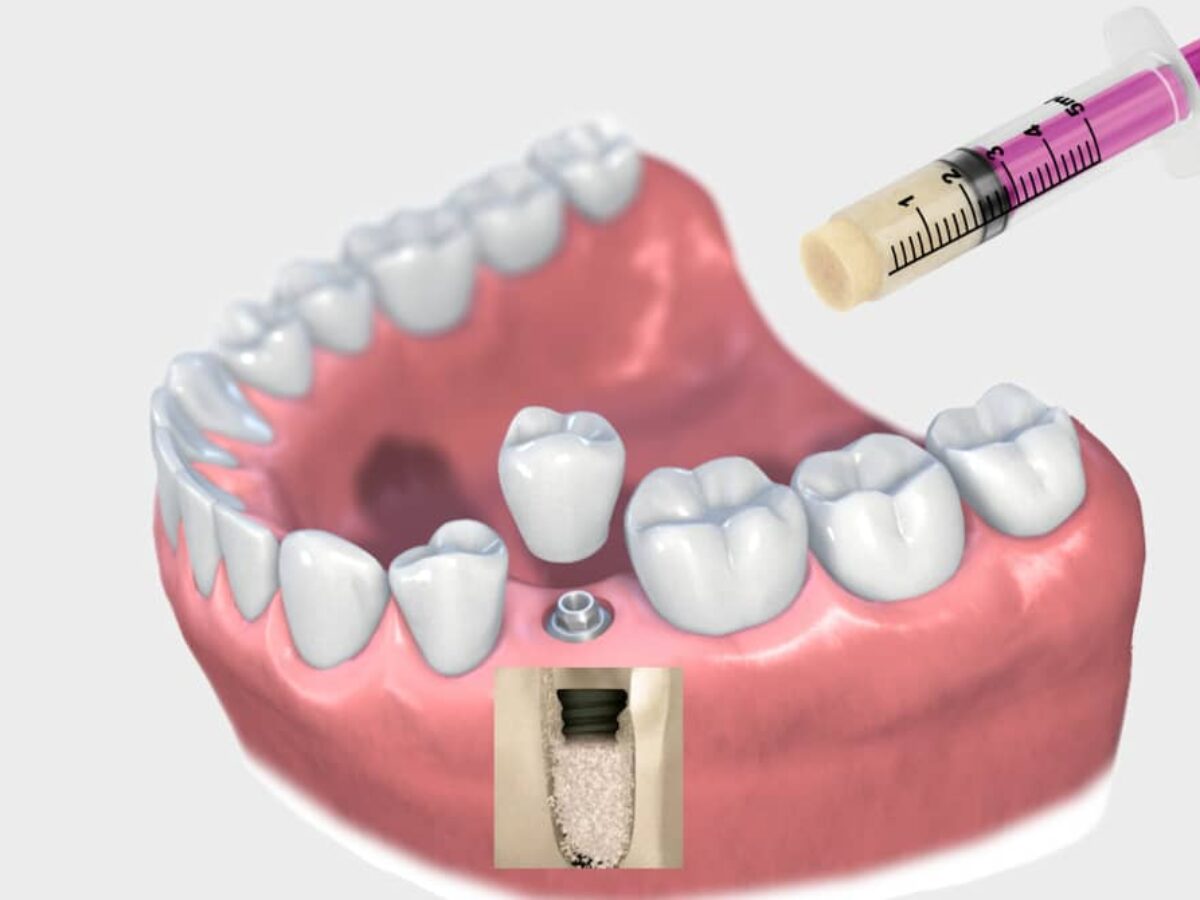
A dental bone graft rebuilds lost jawbone so there is enough solid bone to hold a dental implant securely. Minor grafts can often be placed on the same day as the implant, while larger grafts need 3 to 9 months to heal before the implant goes in. In Turkey, bone grafting typically costs a fraction of UK or European prices and is often planned as part of a two-trip implant treatment.
Key Takeaways
- Bone grafting is needed when the jawbone is too thin, short or soft to support a dental implant, most often after tooth loss, gum disease or years of wearing dentures.
- There are four main graft materials: autograft (your own bone), allograft (donor bone), xenograft (bovine bone) and alloplast (synthetic bone).
- Common procedures include socket preservation, ridge augmentation, block grafts and sinus lifts.
- Healing time depends on the graft size: same-day for minor grafts, 3 to 4 months for socket grafts, and 6 to 9 months for block grafts and sinus lifts.
- The procedure is done under local anaesthetic. Most patients report mild discomfort and swelling for 3 to 5 days.
- Bone grafting in Turkey costs significantly less than in the UK, often allowing patients to combine grafting and implants for less than the price of implants alone at home.
- Some patients can avoid grafting with alternatives such as All-on-4 tilted implants, short implants or subperiosteal implants.
What Is a Bone Graft for Dental Implants?
A bone graft for dental implants is a surgical procedure that adds bone or bone-substitute material to the jaw. Over time, your body replaces the graft material with its own new bone, creating a stable base for the implant. Without enough bone, an implant may not integrate properly and can fail.
Who Needs a Bone Graft Before Dental Implants?
You may need a dental bone graft if you have:
- A missing tooth for a long time. The jawbone starts shrinking within months of tooth loss.
- Advanced gum disease (periodontitis). Infection destroys the bone that supports the teeth.
- Worn dentures for years. Dentures don’t stimulate the bone, so it gradually resorbs.
- Facial or dental trauma that damaged the jaw.
- An enlarged sinus in the upper back jaw, leaving too little bone height.
A 3D CBCT scan is the only reliable way to measure bone volume and confirm whether grafting is needed.
Types of Bone Graft Materials
| Graft material | Source | Key advantage | Consideration |
|---|---|---|---|
| Autograft | Your own bone (chin, jaw or hip) | Gold standard, fastest integration | Requires a second surgical site |
| Allograft | Processed human donor bone | No second surgery | Slower integration than autograft |
| Xenograft | Purified bovine (cow) bone | Widely used, keeps its volume well | Slow to be replaced by natural bone |
| Alloplast | Synthetic materials such as hydroxyapatite | No animal or human source | Best for smaller defects |
Many surgeons combine materials and add a collagen membrane (guided bone regeneration) or PRF (platelet-rich fibrin from your own blood) to speed up healing.
Types of Bone Grafting Procedures
Socket preservation. Graft material is placed straight into the socket after a tooth is extracted to stop the bone from shrinking.
Ridge augmentation. Bone is added to the width or height of the jaw ridge where bone has already been lost.
Block bone graft. A solid piece of bone is fixed to the jaw with small screws. This is used for major bone loss.
Sinus lift. The sinus membrane in the upper jaw is gently lifted and bone is placed underneath to increase bone height for back-tooth implants. Read our full guide to sinus lift in Turkey.
How Much Does Bone Grafting Cost in Turkey?
Bone grafting cost depends on the graft type, the material used and how many areas need treatment. The table below shows indicative market ranges:
| Procedure | Turkey (approx.) | UK (approx.) |
|---|---|---|
| Minor bone graft (per site) | €150 to €500 | £500 to £1,500 |
| Sinus lift (per side) | €400 to €1,000 | £1,500 to £3,000 |
| Block bone graft | €800 to €1,500 | £2,000 to £4,000 |
Final prices are confirmed only after a CBCT scan and a personal treatment plan. For full implant pricing, see how much dental implants cost in Turkey.
Bone Graft Healing Time: How Long Before You Can Get Implants?
| Graft type | Healing time before implant |
|---|---|
| Minor graft placed with the implant | Same day |
| Socket preservation | 3 to 4 months |
| Ridge augmentation | 4 to 6 months |
| Block graft | 6 to 9 months |
| Sinus lift | 6 to 9 months (or same day in some cases) |
For international patients, this usually means two trips to Turkey: the first for extractions, grafting and temporary teeth, and the second for implant placement or final restorations.
Bone Graft Recovery: What to Expect
- Days 1 to 3: Swelling and mild pain peak. Use cold compresses and prescribed painkillers.
- Days 4 to 7: Swelling fades. Eat soft foods and avoid chewing on the graft site.
- Weeks 2 to 3: Stitches dissolve or are removed and the gums close over the area.
- Months 3 to 9: The graft matures into new bone, ready for the implant.
Avoid smoking, drinking through straws and strenuous exercise in the first week. Smoking seriously increases the risk of graft failure. See our guide to dental implants for smokers and diabetics.
Is Bone Grafting Painful?
No, the procedure itself is not painful, because it is performed under local anaesthetic, and sedation is available for anxious patients. Afterwards, most people describe the discomfort as similar to a tooth extraction, easily managed with over-the-counter pain relief.
Alternatives to Bone Grafting
If you want to avoid grafting or shorten the treatment time, your surgeon may suggest:
- All-on-4 implants, which use angled implants to make the most of existing bone. Compare All-on-4 vs All-on-6.
- Short or narrow implants for areas with limited bone height.
- Subperiosteal implants, which sit on top of the bone rather than inside it. Learn more about subperiosteal implants in Turkey.
- Zygomatic implants, which anchor into the cheekbone for severe upper-jaw bone loss.
Frequently Asked Questions
Is a bone graft always needed for dental implants?
No. Many patients have enough bone for implants without grafting. A CBCT scan will confirm this.
Can a bone graft fail?
It’s uncommon, but it can happen, most often because of infection, smoking or pressure on the site during healing.
Can I get a bone graft and implant on the same day?
Yes, if the bone loss is minor and the implant can achieve good stability at placement.
How long does a bone graft last?
Once integrated, the graft becomes part of your natural jawbone and is permanent.