




TL;DR: Invisalign costs £1,500–£5,500 for a full treatment and gradually straightens teeth over 6–18 months, while veneers cost £250–£1,000 per tooth and instantly change the shape, color, and alignment of teeth in as little as 1–2 visits. Invisalign is the better choice for fixing crowded or misaligned teeth without altering enamel, while veneers are better for correcting shape, chips, gaps, or discoloration with immediate results.
Invisalign and veneers solve different problems, but they’re two of the most frequently compared cosmetic dental options because both promise a straighter, more attractive smile. The confusion is understandable some patients could achieve their goal with either treatment, while others need one specifically. Below is a full comparison of cost, treatment time, durability, and which option suits which case.
Cost Comparison: Invisalign vs Veneers
| Treatment | Average Cost (GBP) | Treatment Time |
|---|---|---|
| Invisalign (full treatment) | £1,500 – £5,500 | 6 – 18 months |
| Veneers (per tooth) | £250 – £1,000 | 1 – 2 visits (days) |
| Veneers (full smile, 8–10 teeth) | £2,000 – £8,000 | 1 – 2 visits |
Invisalign cost varies mainly by case complexity and treatment length, while veneers cost depends on material porcelain veneers sit at the higher end, composite veneers at the lower end.
What Invisalign Actually Fixes
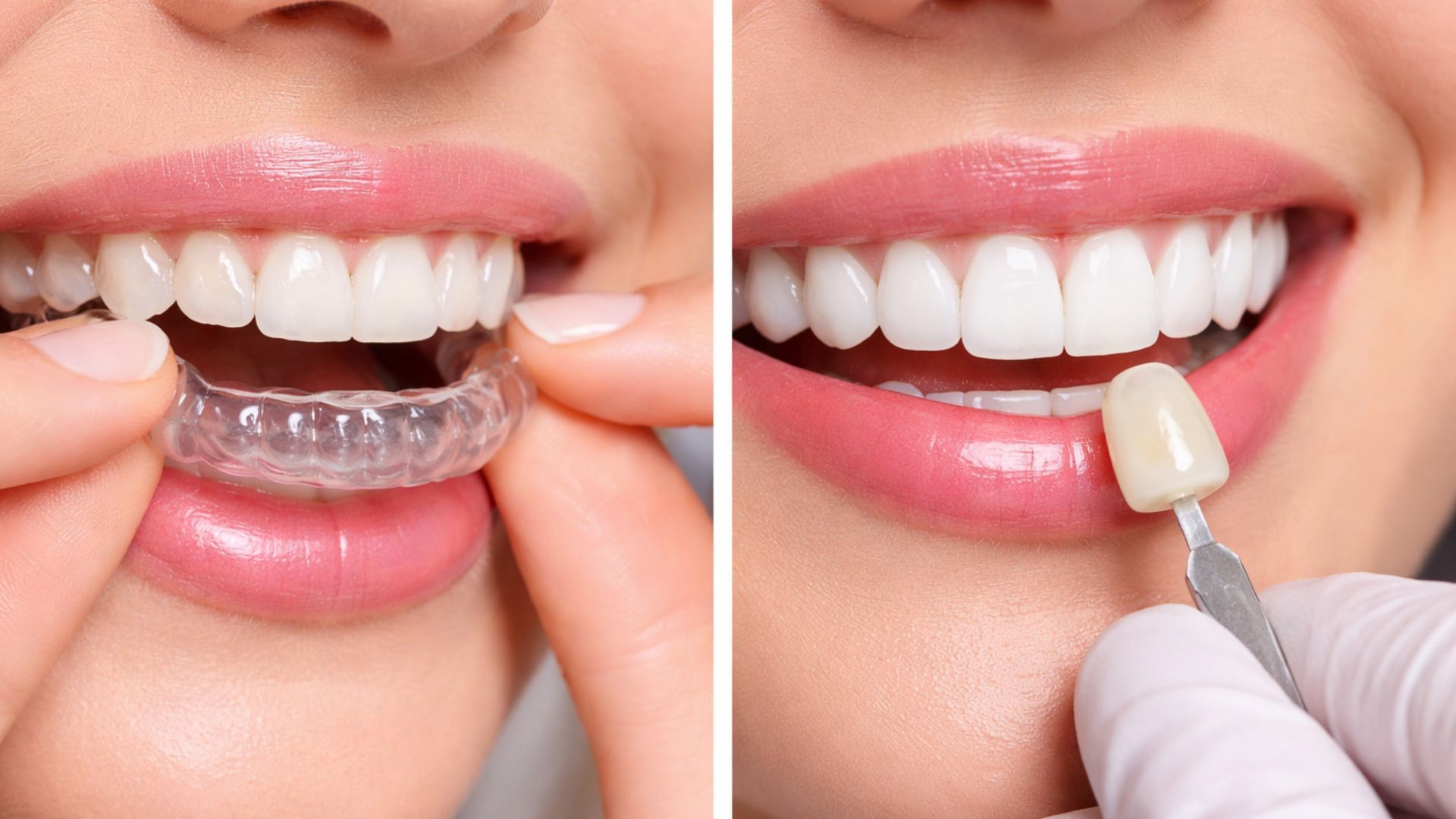
Invisalign uses a series of clear, custom-made aligners to gradually move teeth into a straighter position. It’s designed to correct:
- Crowded or overlapping teeth
- Gaps between teeth
- Mild to moderate bite issues (overbite, underbite, crossbite)
- Teeth that have shifted after previous orthodontic treatment
Because Invisalign moves your natural teeth rather than covering them, no enamel is removed, and the change happens gradually which is why it takes months rather than days.
What Veneers Actually Fix
Veneers are thin shells (usually porcelain or composite) bonded to the front of the teeth. They’re designed to correct:
- Chipped, worn, or unevenly shaped teeth
- Discoloration that doesn’t respond to whitening
- Small gaps or minor misalignment (a cosmetic fix, not a structural one)
- Overall smile shape and symmetry (common in “Hollywood Smile” cases)
Unlike Invisalign, veneers don’t move teeth — they mask the visible surface, which is why results are immediate but a thin layer of enamel is typically removed to fit them properly.
Durability & Maintenance
- Invisalign aligners are temporary tools; once treatment ends, a retainer is needed to maintain the new position long-term. There’s no ongoing material to maintain beyond that.
- Porcelain veneers last 10–15 years with proper care and don’t stain, but can chip under heavy bite force.
- Composite veneers last 5–7 years and are easier to repair, but stain more easily than porcelain.
Which One Should You Choose?
- Choose Invisalign if your main concern is crowding, gaps, or bite alignment and you’re comfortable with a multi-month process.
- Choose veneers if your main concern is tooth shape, color, or minor chips and you want results in a single trip.
- Some patients combine both: Invisalign first to straighten, followed by veneers to perfect shape and color — a common approach for full smile makeovers.
FAQ
Is Invisalign cheaper than veneers?
It depends on the case Invisalign for a full treatment costs £1,500–£5,500, while a full set of veneers (8–10 teeth) costs £2,000–£8,000, so single-tooth veneer cases are often cheaper than Invisalign.
Can veneers fix crooked teeth like Invisalign?
Veneers can mask minor misalignment cosmetically, but they don’t move teeth for significant crowding or bite issues, Invisalign or braces are the appropriate treatment.
Do veneers ruin your teeth?
No, when placed correctly by a qualified dentist, veneers only remove a thin layer of enamel and don’t damage the underlying tooth structure.