




Key Takeaways
- If you’re leaning toward the implant-supported denture route mentioned above, it’s worth comparing the two main approaches side by side — see our breakdown of All-on-4 vs. All-on-6 dental implants to see which fits your bone density and budget.
- Once you’ve decided implants are the right long-term investment, the next question is what happens during the healing phase our dental implant recovery timeline walks through what to expect month by month.
- Material matters too: the crown or implant post you choose can affect both durability and appearance compare titanium vs. zirconia dental implants before your consultation.
- If you’re specifically weighing the bridge option against a permanent restoration, see current dental bridge pricing in Turkey for a realistic cost comparison.
- Replacing a full arch rather than a single tooth? Our guide to full mouth dental implant costs breaks down pricing for that specific scenario.
- Whichever option you choose, picking the right clinic matters as much as picking the right treatment see how to choose a dental clinic in Turkey before booking a consultation.
Losing a tooth whether from decay, injury, or extraction leaves you with three realistic paths forward: a dental implant, a dental bridge, or a denture. Each of these tooth replacement options works differently, costs differently, and lasts differently, which is exactly why this comparison is one of the most searched decisions in dentistry.
This guide breaks down dental implant vs bridge vs denture in plain terms, so you can walk into your consultation already knowing which option fits your situation, budget, and long-term goals.
The Three Tooth Replacement Options at a Glance
| Factor | Dental Implant | Dental Bridge | Denture |
|---|---|---|---|
| How it works | Titanium post placed in jawbone, topped with a crown | Crown attached to filed-down neighboring teeth | Removable appliance resting on gums |
| Affects neighboring teeth? | No | Yes — adjacent teeth are shaved down | No |
| Prevents bone loss? | Yes | No | No |
| Typical lifespan | 20+ years, often permanent | 10–15 years | 5–8 years |
| Treatment time | 3–6 months (osseointegration) | 2–3 weeks | 2–4 weeks |
| Removable? | No | No | Yes |
| Best for | Single or multiple missing teeth, long-term solution | 1–3 missing teeth in a row with healthy neighboring teeth | Multiple or full-arch tooth loss, budget-conscious patients |
| Relative cost | Highest upfront | Mid-range | Lowest upfront |
What Is a Dental Implant?
A dental implant replaces a missing tooth from the root up. A titanium post is surgically placed into the jawbone, where it fuses with the bone over 3–6 months through a process called osseointegration — after which a custom crown is attached on top.
Advantages:
- Functions and feels like a natural tooth
- The only option that actively prevents jawbone loss, since it stimulates the bone the way a natural root does
- Doesn’t rely on or damage neighboring teeth
- With proper care, implants can last 20+ years or a lifetime
Drawbacks:
- Highest upfront cost of the three options
- Requires a healing period of several months before the final crown
- Needs sufficient jawbone density (bone grafting may be required if bone has already receded)
- Requires minor surgery
Best for: Patients replacing one or more teeth who want the longest-lasting, most natural-feeling solution, and who have — or are willing to build — adequate bone density.
What Is a Dental Bridge?
A dental bridge replaces a missing tooth by anchoring a false tooth (or teeth) to the natural teeth on either side of the gap. Those neighboring teeth are filed down and capped with crowns that support the bridge structure.
Advantages:
- Faster treatment timeline than implants — typically completed in 2–3 weeks
- No surgery required
- Generally less expensive than an implant
- A well-established, predictable procedure
Drawbacks:
- Requires shaving down healthy adjacent teeth, which permanently alters them
- Doesn’t stop bone loss in the area of the missing tooth root
- Typically needs replacement every 10–15 years
- Puts extra chewing load on the supporting teeth, which can shorten their lifespan
Best for: Patients with 1–3 missing teeth in a row who have strong, healthy neighboring teeth and prefer to avoid surgery.
What Is a Denture?
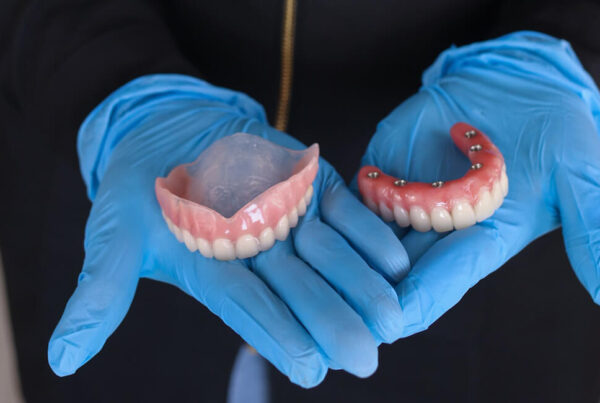
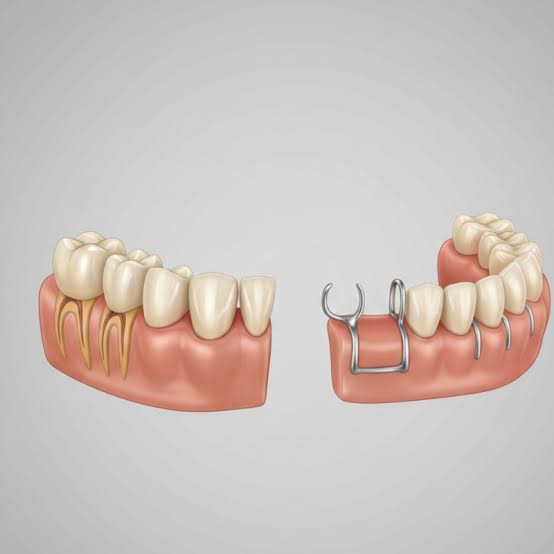
A denture is a removable appliance that replaces some (partial denture) or all (full denture) of the teeth in an arch. Modern dentures are custom-fitted to rest on the gums and, in some cases, clip onto remaining natural teeth or implants for extra stability.
Advantages:
- Lowest upfront cost of the three options
- No surgery required
- Can replace an entire arch of teeth at once
- Removable for cleaning
Drawbacks:
- Shortest lifespan — typically 5–8 years before needing a reline or replacement
- Does not prevent jawbone loss; in fact, the jawbone continues to shrink over time, which can cause dentures to loosen and require frequent adjustment
- Can affect chewing efficiency and, less commonly, some sounds during speech
- Requires daily removal and cleaning
Best for: Patients missing most or all teeth in an arch, especially those looking for a lower-cost or non-surgical solution — often as an interim step before implants, or a permanent option for patients who aren’t candidates for surgery.
Cost Comparison: Implant vs Bridge vs Denture
| Option | Typical Cost (per tooth/arch, US average) |
|---|---|
| Single dental implant | $3,000–$4,500 |
| 3-unit dental bridge | $2,000–$5,000 |
| Partial denture | $700–$1,800 |
| Full denture (per arch) | $1,500–$4,000 |
| Implant-supported denture | $4,000–$8,000+ |
While a denture or bridge may look cheaper upfront, it’s worth factoring in replacement cycles. Over a 20-year period, a denture that needs replacing every 6–7 years, or a bridge every 10–15 years, can approach — or exceed — the total cost of a single implant that’s designed to last permanently.
Which Option Prevents Bone Loss?
This is one of the most overlooked factors in the dental implant vs bridge vs denture decision. Only a dental implant actively stimulates the jawbone the way a natural tooth root does, because it’s anchored directly in the bone. Bridges and dentures sit on top of the gum or rely on neighboring teeth, so the bone beneath the missing tooth gap continues to gradually resorb over time — which is why dentures often need to be relined or replaced as the jaw shape changes.
Which Option Lasts the Longest?
Ranked by typical longevity:
- Dental implant — 20+ years, often a lifetime with proper care
- Dental bridge — 10–15 years before replacement is usually needed
- Denture — 5–8 years before a reline or new denture is required
How to Decide: A Quick Decision Guide
- You’re missing one tooth and have healthy jawbone → Dental implant is usually the best long-term investment.
- You’re missing 1–3 teeth in a row with strong neighboring teeth, and want to avoid surgery → A bridge is a solid, faster option.
- You’re missing most or all of your teeth, or on a tighter budget → A denture — potentially an implant-supported denture down the line — is the practical starting point.
- You have low bone density and don’t want a bone graft → A bridge or denture may be more suitable, at least initially.
- You want to stop future bone loss and are comfortable with a multi-month treatment plan → Implants are the only option that directly protects long-term jaw health.
Can You Combine Options?
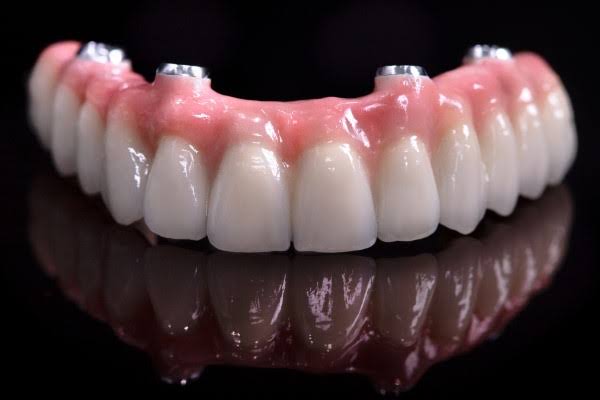
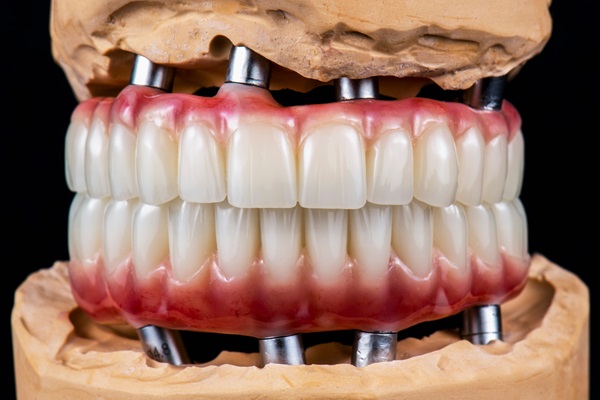
Yes — many patients use a combination approach. A common example is an implant-supported denture, sometimes called an All-on-4 or All-on-6 restoration, where a small number of implants anchor a full denture arch. This delivers much of the stability and bone-preserving benefit of implants at a lower cost than replacing every single tooth individually.
Final Verdict
There’s no single “best” answer in the dental implant vs bridge vs denture debate — the right choice depends on how many teeth you’re replacing, your bone health, your budget, and how long-term you want the solution to be. Implants offer the strongest long-term value and the only real protection against bone loss, bridges offer a fast non-surgical fix for a few missing teeth, and dentures remain the most accessible option for extensive tooth loss.
The best next step is a consultation where your dentist can assess your bone density, remaining teeth, and goals, and map out which option — or combination of options — makes the most sense for your specific case.