



Periodontics treatment procedures in Turkey offer comprehensive solutions for gum disease, bone loss, and soft tissue problems at 60-70% lower costs than Western countries, with procedures ranging from €150-€2,500 compared to €500-€8,000 abroad. Turkish periodontists use advanced techniques including laser therapy, guided tissue regeneration, bone grafting, and minimally invasive surgeries to treat gingivitis, periodontitis, and restore oral health. With internationally trained specialists, state-of-the-art technology, and JCI-accredited clinics in Istanbul, Antalya, and Izmir, Turkey has become a leading destination for affordable, high-quality periodontal care.
Periodontics Treatment in Turkey – Complete Overview
| Aspect | Details |
|---|---|
| Scaling & Root Planing | €150 – €400 (vs. €500 – €1,500 in UK/USA) |
| Gum Grafting | €300 – €800 per tooth (vs. €1,000 – €3,000 abroad) |
| Bone Grafting | €400 – €1,200 per site (vs. €1,500 – €4,500 abroad) |
| Pocket Reduction Surgery | €500 – €1,500 (vs. €2,000 – €6,000 abroad) |
| Crown Lengthening | €300 – €900 (vs. €1,000 – €3,500 abroad) |
| Treatment Duration | 1-3 visits depending on severity |
| Success Rate | 85-95% with proper maintenance |
| Recovery Time | 1-2 weeks for surgical procedures |
| Technology Used | Laser therapy, digital imaging, microsurgery |
| Best Locations | Istanbul, Antalya, Izmir, Ankara |
Key Takeaways
- Turkey offers world-class periodontal care at 60-70% lower costs while maintaining international quality standards with JCI-accredited clinics and board-certified periodontists
- Advanced treatment options available include laser-assisted therapy, guided tissue regeneration, minimally invasive surgeries, and aesthetic periodontal procedures for comprehensive gum disease management
- Early intervention saves teeth and money—addressing gingivitis and mild periodontitis prevents progression to severe bone loss requiring extensive and costly treatments
- Turkish periodontists use cutting-edge technology including digital periodontal charting, CBCT imaging, piezoelectric surgery, and laser systems for precise diagnosis and treatment
- Comprehensive packages include diagnostic imaging, deep cleaning, surgical procedures, post-operative care, and follow-up appointments, often with accommodation and transfers for international patients
Understanding Periodontics and Gum Disease
Periodontics is the dental specialty focusing on the prevention, diagnosis, and treatment of diseases affecting the gums and supporting structures of teeth. Periodontists undergo additional years of specialized training beyond dental school to master complex procedures that save teeth and restore oral health.
Gum disease, also called periodontal disease, progresses through stages. Gingivitis represents the earliest, reversible stage characterized by inflammation, redness, bleeding gums, and mild swelling. Without treatment, it advances to periodontitis, where infection spreads below the gum line, destroying connective tissue and bone supporting teeth.
Advanced periodontitis involves significant bone loss, deep periodontal pockets (spaces between teeth and gums), tooth mobility, gum recession, and potential tooth loss. This stage requires comprehensive periodontal treatment to halt disease progression and restore function.
Risk factors accelerating periodontal disease include poor oral hygiene, smoking and tobacco use, diabetes and metabolic disorders, genetic predisposition, stress and hormonal changes, certain medications, and nutritional deficiencies.
Turkish periodontal specialists emphasize early detection and intervention, recognizing that preventing disease progression is more cost-effective and less invasive than treating advanced stages. Comprehensive examinations identify problems before they become severe.
Non-Surgical Periodontal Treatments in Turkey
Non-surgical periodontics represents the first line of defense against gum disease, offering effective solutions for mild to moderate cases without incisions or sutures. These procedures form the foundation of periodontal therapy in Turkey.
Scaling and Root Planing (Deep Cleaning)
Scaling and root planing is the most common non-surgical periodontal treatment, often called deep cleaning. This procedure goes beyond routine dental cleaning to remove bacterial deposits below the gum line.
The scaling phase involves removing plaque, tartar, and bacterial toxins from tooth surfaces and beneath gums using ultrasonic scalers and hand instruments. Turkish periodontists use advanced ultrasonic devices that break up deposits with high-frequency vibrations while flushing the area with antimicrobial solutions.
Root planing smooths rough tooth root surfaces where bacteria accumulate, removing contaminated tooth structure and creating a clean surface that allows gums to reattach. This smoothing discourages future bacterial colonization.
Treatment process typically involves local anesthesia for patient comfort, quadrant-by-quadrant cleaning (treating one section of the mouth per appointment), 60-90 minutes per quadrant, and 2-4 appointments for complete mouth treatment.
Post-treatment expectations include mild gum tenderness for 2-3 days, temporary tooth sensitivity, improvement in gum health within weeks, and reduced bleeding and inflammation.
Cost in Turkey: €150 – €400 for full mouth treatment compared to €500 – €1,500 in Western countries.
Laser-Assisted Periodontal Therapy
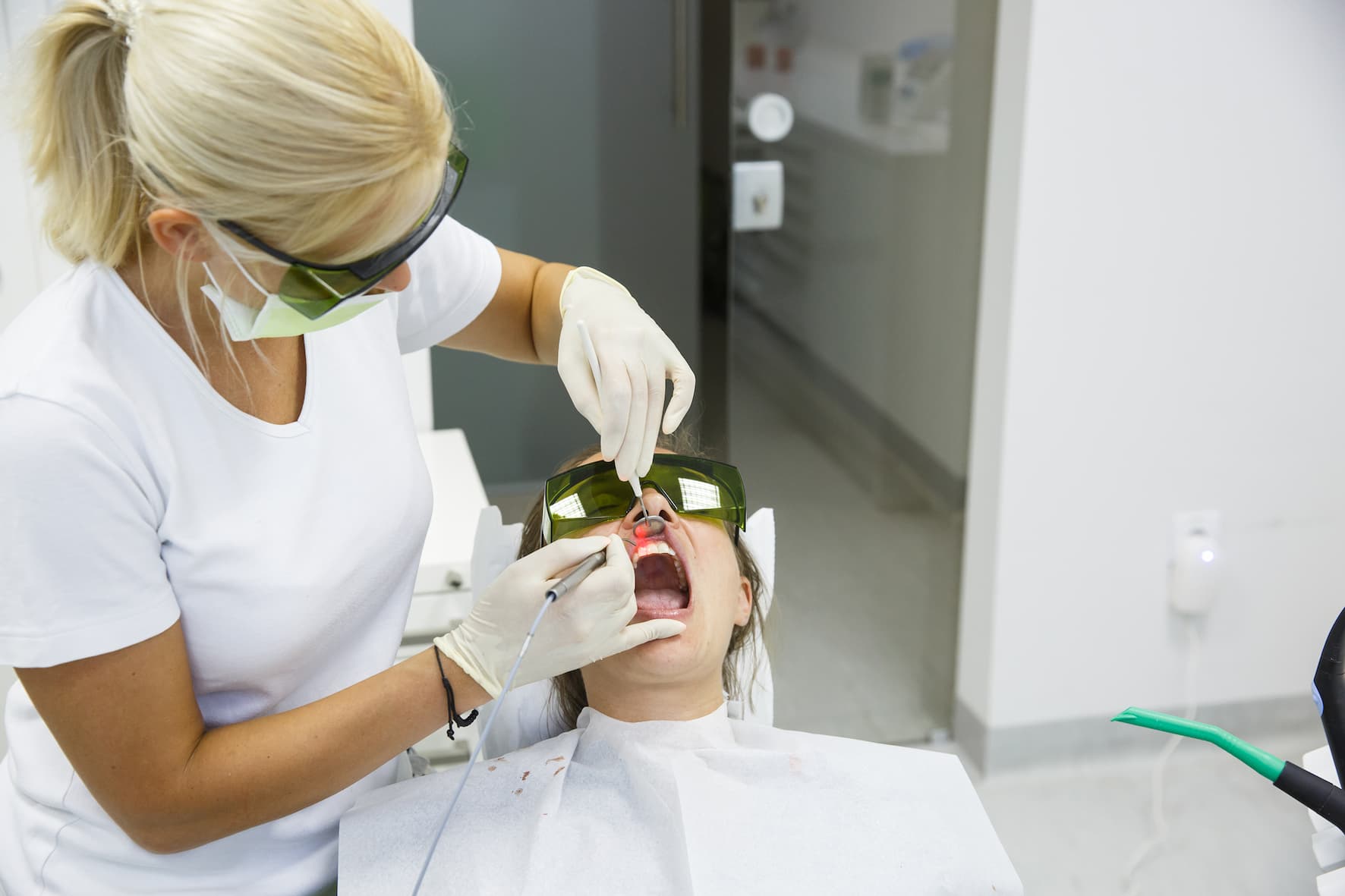
Laser periodontal treatment represents advanced technology for treating gum disease with minimal discomfort and faster healing. Turkish dental clinics increasingly offer this cutting-edge option.
Diode lasers or erbium lasers target and eliminate diseased tissue and bacteria in periodontal pockets without cutting healthy gums. The laser energy sterilizes the pocket, removes infected tissue, and stimulates healing.
Advantages of laser therapy include less bleeding and swelling, reduced post-operative discomfort, faster healing times, precision targeting of diseased areas, minimal damage to healthy tissue, and often no need for sutures.
The LANAP protocol (Laser Assisted New Attachment Procedure) used by some Turkish periodontists specifically targets bacteria and diseased tissue while preserving healthy structures, promoting regeneration rather than just removal.
Ideal candidates for laser treatment include patients with moderate periodontitis, those seeking less invasive options, individuals with dental anxiety, and patients wanting faster recovery.
Cost in Turkey: €400 – €1,200 depending on severity and number of sites treated.
Antibiotic Therapy
Systemic or local antibiotics complement mechanical cleaning in managing periodontal infections. Turkish periodontists use antibiotics strategically for aggressive or resistant cases.
Local antibiotic delivery involves placing antibiotic gel or chips (such as Arestin or PerioChip) directly into periodontal pockets after deep cleaning. These time-release medications continuously fight bacteria at infection sites for 7-14 days.
Systemic antibiotics (oral pills) may be prescribed for severe infections, aggressive periodontitis, or when infection spreads beyond the mouth. Common choices include amoxicillin, metronidazole, or doxycycline.
Antimicrobial mouth rinses containing chlorhexidine help control bacteria between appointments and support healing after procedures.
Turkish dental protocols emphasize judicious antibiotic use, reserving them for appropriate cases to prevent resistance while maximizing therapeutic benefit.
Surgical Periodontal Procedures in Turkey
Surgical intervention becomes necessary when non-surgical treatments cannot adequately address deep pockets, significant bone loss, or advanced periodontal disease. Turkish periodontists perform various surgical procedures with excellent outcomes.
Flap Surgery (Pocket Reduction Surgery)
Periodontal flap surgery accesses diseased areas beneath gums to thoroughly clean root surfaces and reduce pocket depth. This procedure provides direct visualization and access for comprehensive treatment.
The surgical process involves administering local anesthesia, making incisions to create gum tissue flaps, folding back flaps to expose tooth roots and bone, removing tartar and diseased tissue from roots, smoothing irregular bone surfaces if needed, repositioning and suturing flaps to reduce pocket depth.
Benefits include elimination of deep bacterial reservoirs, improved access for daily cleaning, reduction in pocket depth (ideally to 3mm or less), prevention of further bone loss, and preservation of natural teeth.
Recovery typically involves mild to moderate discomfort for 3-5 days, swelling that peaks at 48 hours, soft food diet for one week, and healing complete in 2-3 weeks.
Turkish periodontal surgeons use microsurgical techniques with magnification loupes or surgical microscopes, enabling precise incisions, minimal tissue trauma, and faster healing.
Cost in Turkey: €500 – €1,500 for one quadrant compared to €2,000 – €6,000 abroad.
Bone Grafting for Periodontal Defects
Periodontal bone grafting rebuilds bone destroyed by gum disease, creating a foundation for tooth stability and potential implant placement. This regenerative procedure reverses some damage caused by periodontitis.
Graft materials include autogenous bone (from patient’s own body—usually chin or other mouth areas), allograft bone (processed human donor bone), xenograft (bovine or porcine bone), and synthetic bone substitutes (biocompatible materials).
Guided bone regeneration (GBR) enhances grafting success by placing barrier membranes over grafts. These membranes prevent soft tissue from growing into the defect, allowing slower-growing bone cells time to regenerate.
The grafting procedure involves accessing the bone defect through flap surgery, cleaning the area thoroughly, placing bone graft material into the defect, covering with a barrier membrane if using GBR, and suturing tissue closed.
Healing timeline spans 4-9 months for bone maturation, during which the graft integrates with existing bone through a process called osseointegration.
Turkish bone grafting success rates exceed 85% when proper protocols are followed and patients maintain excellent oral hygiene during healing.
Cost in Turkey: €400 – €1,200 per site compared to €1,500 – €4,500 in Western countries.
Guided Tissue Regeneration (GTR)
Guided tissue regeneration promotes growth of new bone and attachment fibers destroyed by periodontal disease. This technique uses barrier membranes to encourage specific tissue types to regenerate.
The principle behind GTR recognizes that different tissues (gum, bone, periodontal ligament) heal at different rates. Gum tissue grows fastest but doesn’t provide structural support. By placing barriers, Turkish periodontists prevent fast-growing gum tissue from occupying spaces where bone and ligament should regenerate.
Membrane types include resorbable membranes that dissolve naturally over months (collagen-based materials) and non-resorbable membranes requiring surgical removal after healing (titanium-reinforced or dense PTFE).
GTR combined with bone grafting provides optimal regeneration, with grafts filling defects while membranes guide tissue development.
Success factors include appropriate case selection (angular bone defects respond best), excellent post-operative oral hygiene, smoking cessation, and controlled diabetes or other systemic conditions.
Turkish periodontal specialists have extensive experience with GTR techniques, achieving regeneration outcomes comparable to the world’s leading centers.
Cost in Turkey: €600 – €1,800 including membranes and materials.
Gum Grafting Procedures
Gingival grafts treat gum recession, covering exposed tooth roots, preventing further recession, and improving aesthetics. Several techniques address different clinical situations.
Free gingival grafts involve removing a small piece of tissue from the palate and attaching it to areas with inadequate gum tissue. This increases the amount of attached gingiva protecting teeth.
Connective tissue grafts are most common for root coverage. A small flap is created at the palate to harvest underlying connective tissue, which is then placed under existing gum tissue at the recession site and sutured.
Pedicle grafts use adjacent gum tissue, partially cutting a flap that remains attached at one end, rotating it to cover the exposed root, and suturing it in place. This requires adequate tissue next to the recession.
Acellular dermal matrix grafts use processed donor tissue as an alternative to harvesting from the patient’s palate, eliminating one surgical site and reducing discomfort.
Turkish gum grafting expertise produces excellent aesthetic outcomes with high success rates. Many Turkish periodontists specialize in microsurgical grafting techniques that minimize scarring and maximize root coverage.
Recovery involves discomfort at graft and harvest sites for 5-7 days, soft food diet for two weeks, avoiding the grafted area when brushing initially, and complete healing in 4-6 weeks.
Cost in Turkey: €300 – €800 per tooth compared to €1,000 – €3,000 in Western countries.
Crown Lengthening
Crown lengthening removes excess gum tissue and sometimes bone to expose more tooth structure. This procedure serves functional and aesthetic purposes.
Functional crown lengthening enables proper restoration when tooth structure is insufficient for crown placement, often after decay removal or tooth fracture below the gum line.
Aesthetic crown lengthening treats “gummy smile” where excessive gum tissue covers teeth, making them appear short. Removing tissue creates proper tooth proportions and balanced smile aesthetics.
The procedure involves local anesthesia, incisions to remove or recontour gum tissue, reshaping underlying bone if necessary to establish proper biologic width, and suturing for optimal healing.
Healing timeline requires 6-8 weeks before final restoration placement, allowing tissues to stabilize completely and reveal the final gum contour.
Turkish cosmetic periodontists often coordinate crown lengthening with restorative dentists and ceramists to achieve optimal functional and aesthetic outcomes.
Cost in Turkey: €300 – €900 compared to €1,000 – €3,500 abroad.
Advanced Periodontal Technologies in Turkey
Cutting-edge technology enhances diagnostic accuracy and treatment outcomes in Turkish periodontal clinics. Investment in advanced equipment demonstrates commitment to providing world-class care.
Digital Periodontal Charting and Imaging
Computerized periodontal charting records pocket depths, recession, bleeding points, and mobility digitally, creating comprehensive databases tracking disease progression and treatment response over time.
Cone Beam CT (CBCT) imaging provides three-dimensional views of bone architecture, revealing defect morphology, bone volume, and anatomical structures with exceptional detail. This technology guides surgical planning and bone grafting strategies.
Intraoral cameras document conditions visually, helping patients understand their periodontal status and treatment needs. Before-and-after photos track improvement.
Digital radiography delivers high-quality images with 80-90% less radiation than traditional X-rays, with instant availability for analysis.
Piezoelectric Surgery
Piezoelectric devices use ultrasonic vibrations to cut bone precisely while preserving soft tissues. This technology enables safer, more controlled periodontal surgery with reduced trauma.
Advantages include selective cutting (affects only hard tissue), reduced bleeding and swelling, enhanced precision for delicate procedures, and better post-operative comfort.
Turkish periodontal surgeons use piezoelectric instruments for crown lengthening, bone grafting, and other procedures requiring bone modification.
Laser Systems for Soft Tissue Management
Diode lasers, erbium lasers, and CO2 lasers each serve specific periodontal applications. Turkish clinics often maintain multiple laser systems to address various clinical needs.
Applications include gingivectomy and gingivoplasty, frenectomy procedures, removal of inflamed tissue from pockets, bacterial reduction, and biostimulation promoting faster healing.
Laser advantages include minimal bleeding, reduced need for anesthesia in some cases, faster healing, less post-operative discomfort, and excellent aesthetic outcomes.
Maintenance and Long-Term Success
Periodontal maintenance is crucial for long-term success after active treatment. Turkish periodontists emphasize that periodontal disease is manageable but requires ongoing commitment.
Supportive Periodontal Therapy
Regular maintenance appointments every 3-4 months (more frequent than standard cleanings) include professional plaque and calculus removal, periodontal pocket monitoring, assessment of oral hygiene effectiveness, and early intervention if disease signs recur.
Home care remains essential with twice-daily brushing using proper technique, daily interdental cleaning (floss, interdental brushes, or water flossers), antimicrobial mouth rinses if recommended, and avoidance of risk factors like smoking.
Lifestyle Modifications
Smoking cessation dramatically improves periodontal outcomes. Smokers have 3-6 times higher risk of treatment failure and disease progression.
Diabetes management through proper blood sugar control enhances healing and reduces infection risk. The relationship between diabetes and periodontal disease is bidirectional—each affects the other.
Nutritional support with adequate vitamin C, vitamin D, calcium, and protein supports tissue healing and immune function.
Stress reduction may improve outcomes as chronic stress affects immune response and healing capacity.
Why Choose Turkey for Periodontics Treatment
Turkey offers compelling advantages for periodontal patients seeking quality care at affordable prices with comprehensive support services.
Cost savings of 60-70% make extensive periodontal treatment accessible to patients who might delay or forego necessary care in their home countries due to financial constraints.
Highly trained specialists including board-certified periodontists with international training, memberships in European and American periodontal associations, and extensive surgical experience provide expertise matching world-leading centers.
State-of-the-art facilities with JCI accreditation, modern surgical suites, advanced technology platforms, and strict infection control protocols ensure safe, effective treatment.
Efficient treatment scheduling allows international patients to complete multiple procedures during extended visits, with coordinated appointments maximizing time efficiency.
Comprehensive packages including diagnostic workup, all necessary procedures, post-operative medications, follow-up appointments, and often accommodation and transfers simplify the treatment process.
Tourism opportunities let patients combine dental care with exploration of Turkey’s rich history, stunning landscapes, and vibrant culture, transforming medical treatment into a memorable experience.
Long-term support continues after patients return home, with Turkish periodontal clinics offering remote consultations, treatment records for local dentist coordination, and welcome return visits if additional care is needed.
Language support through English-speaking staff and interpreters eliminates communication barriers, ensuring patients fully understand their diagnosis, treatment options, and care instructions.
The combination of affordability, quality, technology, and patient support makes periodontics treatment procedures in Turkey an excellent choice for international patients seeking to restore their oral health and save their teeth from periodontal disease.
Your Smile, Our Passion
Ready to Transform Your Smile?
Fill in our quick form and our team will contact you to confirm all details and answer your questions.
Book Your Free
Consultation Today
Our specialists will guide you through the best treatment options tailored for you.
Step 1 / 2
Step 2 / 2
← Back to Contact Info
Request Received!
Thank you! Our team will be in touch within 24 hours to confirm your consultation and answer any questions.
Trusted by Thousands
Find your perfect smile at Dr. Wonder Clinic