




By the Dr. Wonder Clinic dental team, Istanbul · Last updated: 25 October 2026 · 10 min read
In short
- Receded gum tissue does not grow back on its own, but gum grafting can cover exposed roots again.
- More than half of adults have at least one site of gum recession of 1 mm or more (Kassab & Cohen, Journal of the American Dental Association, 2003).
- Untreated recession tends to get worse over time, even in people who brush and floss well (Chambrone & Tatakis, Journal of Periodontology, 2016).
- A connective tissue graft placed under a repositioned gum flap is the best-supported treatment for covering roots (Chambrone et al., Cochrane review, 2018).
What Are Receding Gums?
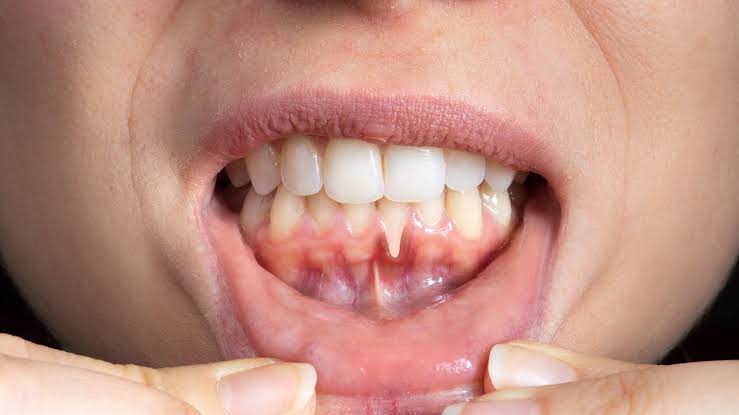
Receding gums (gingival recession) means the gum line has moved down the tooth and exposed part of the root. The tooth looks longer, and the exposed root is often sensitive to cold, sweet or brushing.
Gum recession is very common. A review in the Journal of the American Dental Association found that more than 50% of people have one or more sites with at least 1 mm of recession (Kassab & Cohen, 2003). The same review found recession in people with both good and poor oral hygiene, so clean teeth alone do not rule it out.
Recession is different from gum disease, although the two often appear together. Gum disease is an infection of the gums and bone; recession is the position of the gum line, which gum disease is one of several reasons to change.
What Causes Receding Gums?
Gum recession usually has more than one cause. Epidemiological studies most often link it to four factors (Kassab & Cohen, 2003):
- Trauma to the gum: physical damage to the gum line, such as from aggressive brushing.
- Gum inflammation and gum disease: infection damages the tissue that holds the gum line in place.
- Tobacco use: smoking and other tobacco use are associated with recession.
- Teeth out of position: malpositioned teeth are more likely to show recession.
Gum disease deserves special attention because it can keep recession going after other causes are fixed. Risk factors for gum disease include poor oral hygiene, smoking, diabetes, genetics, stress, hormonal changes and some medications (gum disease and periodontics in Turkey).
Can Receding Gums Grow Back?
No. Gum tissue that has receded does not grow back by itself, and untreated recession is more likely to get worse than better. The good news is that surgery can move or add gum tissue to cover the exposed root again.
A systematic review of 1,753 untreated recession sites found that, over the long term, the odds of having recession roughly doubled: 2.43 times higher per patient and 2.16 times higher per site (Chambrone & Tatakis, Journal of Periodontology, 2016). The authors concluded that untreated recession in people with good oral hygiene is still likely to deepen over time.
What brushing, cleaning and quitting smoking can do is slow or stop further recession. They cannot replace tissue that is already gone.
Receding Gums Treatment Options Compared
The right treatment depends on whether gum disease is active, how many teeth are affected and how deep the recession is. Evidence checked 25 October 2026.
| Treatment | Best for | Covers the root? | Evidence level | Main limitation |
|---|---|---|---|---|
| Deep cleaning (scaling and root planing) | Recession driven by active gum disease | No; stops the cause | Standard first step | Does not replace lost gum |
| Connective tissue graft + coronally advanced flap | Single or few teeth, deeper recession | Yes | Strongest; Cochrane review (2018) | Second surgical site on the palate |
| Donor tissue graft (acellular dermal matrix) | Patients who want to avoid palate harvesting | Yes | Closest substitute to own tissue (Cochrane, 2018) | Evidence slightly weaker than for own tissue |
| Flap or tunnel technique with graft, several teeth | Multiple neighbouring recessions | Yes, often partly | 82.6% average root coverage (EFP review, 2026) | Complete coverage in about 63% of cases |
| Pinhole surgical technique | Early to moderate recession without bone loss | Yes | Based largely on its developer’s results | Technique-sensitive; strict aftercare |
| Orthodontics | Recession linked to a tooth out of position | Indirectly | Listed as a treatment option (Kassab & Cohen, 2003) | Corrects tooth position, not lost gum |
Deep cleaning first if gum disease is active
When gum disease is behind the recession, scaling and root planing removes plaque and tartar from below the gum line so the gums can heal and reattach. It is done under local anaesthesia, one section of the mouth at a time (periodontics treatment in Turkey). Deep cleaning stops the infection; it does not cover roots that are already exposed.
Connective tissue graft: the gold standard
A connective tissue graft takes a thin layer of tissue from under the surface of the palate and places it under the gum at the recession site. Combined with a coronally advanced flap, which moves the existing gum up over the root, it gave greater recession reduction than guided tissue regeneration in an updated Cochrane review of randomised trials (Chambrone et al., Cochrane Database of Systematic Reviews, 2018). When patients need both root coverage and thicker gum, the review found connective tissue grafts slightly better than the alternatives.
Donor tissue grafts
An acellular dermal matrix graft uses processed donor tissue instead of the patient’s own palate, which removes the second surgical site. The Cochrane review found weak evidence that it is the substitute whose results come closest to a connective tissue graft (Chambrone et al., 2018).
Treating several teeth at once
When several neighbouring teeth have receded, dentists can treat them in one procedure with a coronally advanced flap or a tunnel technique plus a graft. A 2026 systematic review for the European Federation of Periodontology found 82.6% average root coverage and complete coverage in 62.7% of cases, with better patient-rated appearance after surgery (Stefanini et al., Periodontology 2000, 2026).
Pinhole surgical technique
The pinhole technique, introduced by Dr John Chao, reaches the gum through a small hole and slides it over the root without cutting a flap. For early and moderate recession without bone loss, Chao reported recession reduced by about 94%. The technique is demanding to perform, requires strict food and aftercare rules, and its results in severe recession are less certain (Dental Economics).
How Can You Stop Gums Receding Further?
You can slow or stop further gum recession by removing the causes, even though lost gum will not return without treatment. The steps below follow standard periodontal maintenance advice (periodontics treatment in Turkey).
- Brush twice a day with a gentle technique. Hard scrubbing is one of the trauma-related causes of recession.
- Clean between your teeth daily with floss, interdental brushes or a water flosser.
- Stop smoking. Tobacco use is associated with recession, and smokers face a 3–6 times higher risk of periodontal treatment failure and disease progression.
- Keep diabetes under control. Diabetes and gum disease affect each other in both directions.
- Book maintenance visits every 3–4 months if you have had gum disease, so pockets and recession can be measured and treated early.
If a tooth is out of position, ask whether orthodontic treatment should come before or alongside gum surgery.
How Much Does Receding Gums Treatment Cost in the UK and Turkey?
Gum grafting at Dr. Wonder Clinic in Istanbul costs €300–800 per tooth, compared with an estimated €1,000–3,000 per tooth in the UK and other Western countries (periodontics treatment in Turkey). Prices checked 25 October 2026.
| Treatment | UK / Western Europe (clinic estimate) | Dr. Wonder Clinic, Istanbul |
|---|---|---|
| Deep cleaning, full mouth | €500–1,500 | €150–400 |
| Gum graft, per tooth | €1,000–3,000 | €300–800 |
| Guided tissue regeneration | Not published | €600–1,800 incl. membranes |
| Bone graft, per site | €1,500–4,500 | €400–1,200 |
The final cost depends on how many teeth need grafting, whether the graft comes from your palate or a donor material, and whether gum disease must be treated first. A fixed quote follows a clinical examination. For more on treating the underlying infection, see gum disease treatment cost in Turkey.
Receding Gums in Numbers
The research shows gum recession is common, tends to progress, and responds well to grafting, though full coverage is not guaranteed.
| Finding | Figure | Source |
|---|---|---|
| Adults with at least one site of recession ≥ 1 mm | More than 50% | Kassab & Cohen, JADA, 2003 |
| Untreated recession sites assessed in long-term studies | 1,753 | Chambrone & Tatakis, J Periodontol, 2016 |
| Higher odds of recession over time without treatment | 2.43× per patient, 2.16× per site | Chambrone & Tatakis, 2016 |
| Average root coverage, multiple recessions | 82.6% | Stefanini et al., Periodontology 2000, 2026 |
| Complete root coverage, multiple recessions | 62.7% | Stefanini et al., 2026 |
| Recession reduction with pinhole technique, early to moderate cases | About 94% | Chao, via Dental Economics |
The linked sources for every figure appear in the sections above.
What Most Receding Gums Guides Don’t Tell You
It is tempting to treat “wait and see” as the safe option for mild recession. The evidence suggests waiting usually means more recession, not less.
Good hygiene does not stop recession on its own. Recession is found in people with good and poor oral hygiene alike (Kassab & Cohen, 2003), and untreated sites in people who clean well still tend to deepen (Chambrone & Tatakis, 2016). Brushing protects what is left; it does not reverse what is lost.
Full coverage is a goal, not a promise. Even with the best techniques, complete root coverage across several teeth is reached in roughly six out of ten cases (Stefanini et al., 2026). A clinic that guarantees 100% coverage on every tooth is overselling.
Newer is not always better. The pinhole technique is marketed as scalpel-free and quick, but the connective tissue graft still has the strongest trial evidence behind it (Chambrone et al., 2018). The right choice depends on the depth of recession, the number of teeth and the gum thickness, not on which technique sounds least invasive.
Treat the infection before the cosmetics. Non-surgical treatment is the first line of care for gum disease, so deep cleaning and healthy gums come before any graft.
Receding Gums FAQ
Can receding gums grow back naturally?
No. Receded gum tissue does not regenerate by itself, and untreated recession tends to progress over time (Chambrone & Tatakis, 2016). Good oral hygiene can slow further recession, but covering an exposed root needs a graft or flap procedure.
Is gum grafting painful?
Gum grafting is done under local anaesthesia, so the procedure itself should not hurt. Expect discomfort at the graft and palate sites for 5–7 days, a soft-food diet for about two weeks and full healing in 4–6 weeks (periodontics treatment in Turkey).
Does treating receding gums stop tooth sensitivity?
Usually, yes. Treatments that cover exposed roots typically improve appearance, remove sensitivity and lower the risk of decay on the root surface (Kassab & Cohen, 2003).
How long does a gum graft take to heal?
Most gum grafts heal fully in 4–6 weeks. Brushing the grafted area is avoided at first, and hard foods are avoided for around two weeks.
Is the pinhole technique better than a gum graft?
Not necessarily. The pinhole technique avoids cutting a flap and suits early to moderate recession without bone loss, but connective tissue grafts have stronger trial evidence (Chambrone et al., 2018). Your periodontist should recommend the method that fits the depth of recession and your gum thickness.
Next Step: Get Your Gum Recession Measured
The best receding gums treatment depends on three measurements: how deep the recession is, how many teeth are affected and whether gum disease is active. Once those are known, the choice between deep cleaning, a connective tissue graft, a donor graft or a multi-tooth technique becomes clear.
Dr. Wonder Clinic offers a free consultation. Send clear photos of your gum line through the Get an Offer form or our contact page, and our team will get back to you within 24 hours.
If you are also unhappy with how much gum shows when you smile, our guide to gummy smile treatment covers the opposite problem.
About the author: This guide was written by the Dr. Wonder Clinic dental team in Istanbul, where gum treatments are carried out by periodontists using laser therapy, microsurgery and digital imaging. About Dr. Wonder Clinic