





Porcelain veneers typically last 10 to 15 years, and often up to 20 years with good care. Composite veneers last around 4 to 8 years. How long your veneers last depends mainly on the material, the quality of the dental work, and your daily habits, especially teeth grinding, oral hygiene and regular dental checkups.
Key Takeaways
- Porcelain veneers last 10 to 15+ years and are the most durable, stain-resistant option.
- Composite veneers last 4 to 8 years. They cost less and are easier to repair, but they chip and stain more easily.
- The biggest threats to veneer lifespan are teeth grinding (bruxism), biting hard objects, gum disease and poor oral hygiene.
- Good aftercare is simple: brush twice a day with a soft toothbrush and non-abrasive toothpaste, floss daily, wear a night guard if you grind, and see your dentist every six months.
- Veneers cannot be whitened. If your natural teeth darken, veneers may no longer match and could need replacing.
- Replace veneers when you notice chips, cracks, dark edges, gum recession, looseness, sensitivity or decay near the margins.
- Replacement is routine. The old veneer is removed, the tooth is checked, and a new veneer or crown is fitted.
How Long Do Veneers Last by Type?
| Veneer type | Average lifespan | Stain resistance | Repairable? |
|---|---|---|---|
| Porcelain (E.max, feldspathic) | 10 to 15+ years | Excellent | Usually replaced, not repaired |
| Composite veneers | 4 to 8 years | Moderate | Yes, easily repaired |
| No-prep or minimal-prep veneers | 10 to 15 years | Excellent | Usually replaced |
| Zirconia-based veneers | 10 to 15+ years | Excellent | Usually replaced |
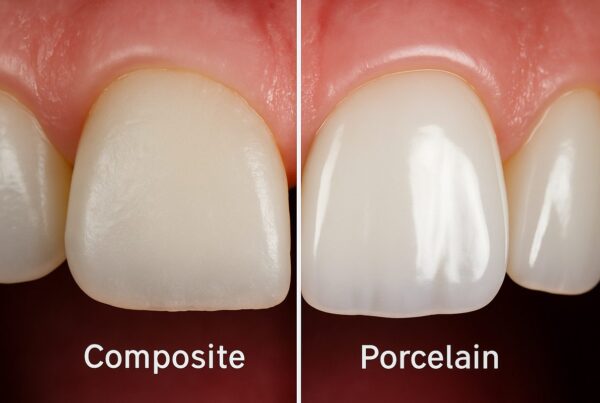
Porcelain veneers are made in a dental lab and bonded to the front of the tooth. Ceramic is hard and non-porous, so it resists staining and wear well.
Composite veneers are sculpted directly onto the tooth using tooth-coloured resin. They are a good option for smaller changes or tighter budgets, but the material is softer and absorbs stains over time. For a closer look, see our guide to composite bonding prices in Turkey.
What Affects How Long Veneers Last?
Five factors have the biggest impact on veneer lifespan:
- Material quality. High-grade ceramics made in a certified lab outlast cheaper materials.
- Bonding and fit. Precise margins and correct bonding stop bacteria from getting under the veneer.
- Bite and grinding. Night-time grinding puts heavy force on veneers and is a leading cause of chips and fractures.
- Gum health. Gum disease can cause recession that exposes the edge of the veneer.
- Lifestyle habits. Smoking, frequent coffee, red wine, and biting nails, pens or ice all shorten veneer life.
Veneers Aftercare: How to Make Them Last Longer
Daily care
- Brush twice a day with a soft-bristled toothbrush.
- Use a non-abrasive, low-RDA toothpaste. Avoid charcoal and harsh whitening pastes, which can scratch the surface.
- Floss daily or use interdental brushes to keep the gumline clean.
- Rinse with an alcohol-free mouthwash, particularly if you have composite veneers.
Habits to avoid
- Don’t use your teeth to open packets or bottles.
- Avoid biting directly into very hard foods, such as ice, hard sweets or bones.
- Limit dark drinks with composite veneers, or rinse with water afterwards.
- Stop smoking, which stains composite and harms gum health.
Professional care
- Book checkups and professional cleaning every six months.
- Ask for a custom night guard if you grind or clench your teeth.
- Wear a sports mouthguard for contact sports.
Do Veneers Stain?
Porcelain veneers are highly stain-resistant, while composite veneers can stain over time. Neither can be whitened with bleaching gel. If you want a brighter smile, whiten your natural teeth before getting veneers so the shade matches. Learn more about teeth whitening in Turkey.
Can Veneers Fall Off?
Yes, but it is uncommon when veneers are bonded correctly. A veneer may come loose because of weak bonding, decay underneath, or a sudden impact. If one falls off, keep it safe, avoid chewing on that side, and contact your dentist as soon as possible. It can often be re-bonded if it isn’t damaged.
When Should Veneers Be Replaced? 7 Warning Signs
- Chips or cracks that affect the look or function of the veneer.
- Dark lines at the gumline caused by gum recession or margin staining.
- Loose or moving veneers.
- New sensitivity or pain, which may point to decay underneath.
- Discolouration, especially with composite veneers.
- Colour mismatch with your natural teeth or newer restorations.
- Rough edges or gaps that trap food and plaque.
Noticing these signs early lets your dentist replace the veneer before the tooth underneath is damaged.
What Happens When Veneers Are Replaced?
The dentist carefully removes the old veneer, checks the tooth for decay or damage, and takes new digital impressions. In most cases, a new veneer is bonded in the same place. If the tooth has weakened or a large area of structure has been lost, a crown may be the better option. Our comparison of porcelain veneers vs crowns explains when each is recommended.
Are Veneers Permanent?
Porcelain veneers are considered a permanent treatment, even though each veneer eventually needs replacing. Because a thin layer of enamel is usually removed, the tooth will always need some form of covering. Minimal-prep and no-shave veneers preserve more enamel, which keeps future options more flexible.
Frequently Asked Questions
Can veneers last a lifetime?
Rarely. Well-maintained porcelain veneers can last 20 years or more, but most people will need at least one replacement during their lifetime.
Which lasts longer, porcelain or composite veneers?
Porcelain veneers last roughly twice as long as composite veneers and keep their colour better.
Do veneers ruin your teeth?
No, when done properly. Problems usually come from over-filing, poor fit or neglected hygiene, not from veneers themselves.
How much does it cost to replace veneers?
Replacement costs are similar to the original treatment and depend on the material and the number of teeth. See our cost of veneers in Turkey guide for current prices.