




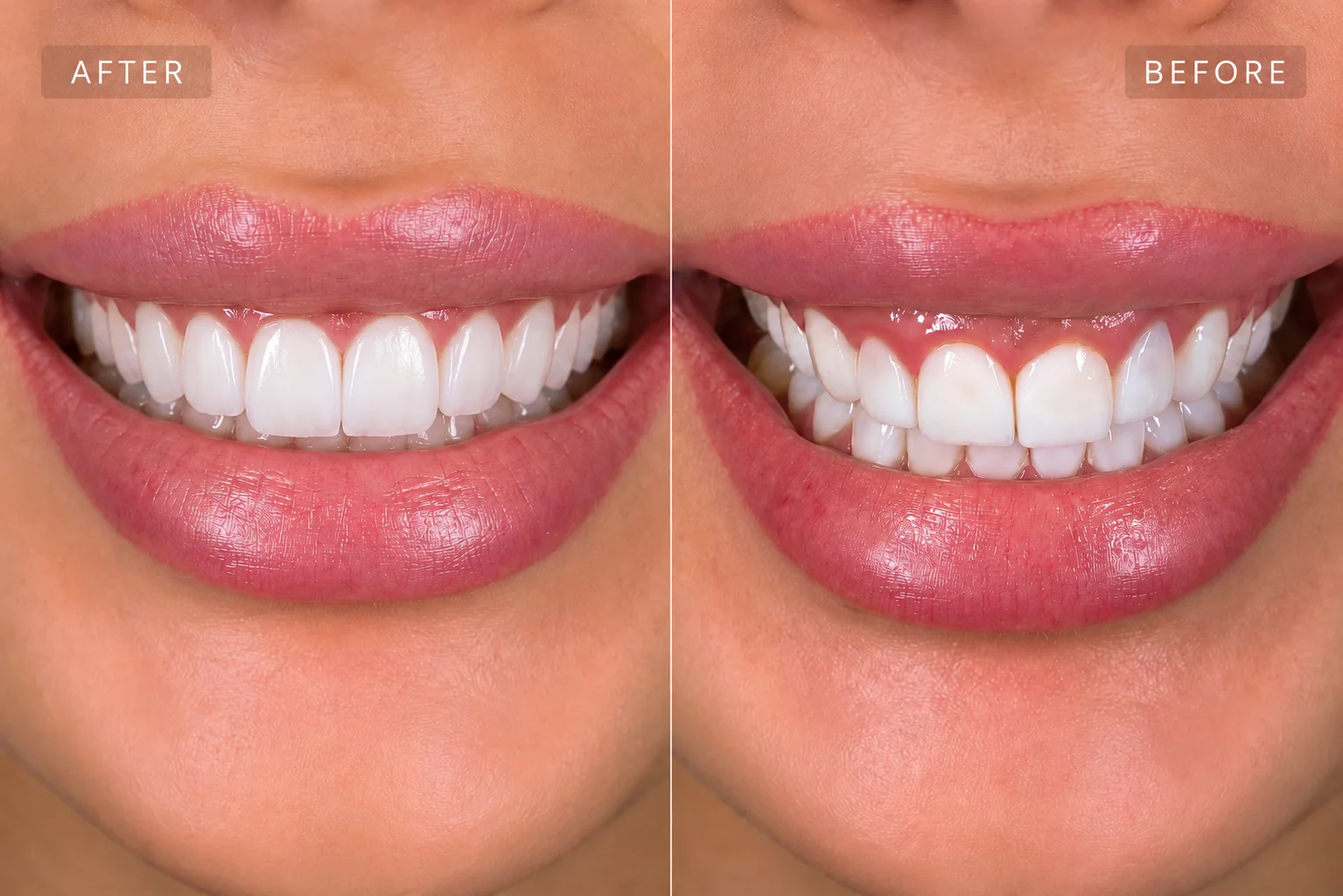
Yes, bad Turkey teeth can usually be fixed. A dentist removes the failed veneers or crowns, treats any decay, nerve damage or gum disease underneath, and then places new, properly fitted restorations. Most revision cases need full crowns, because the original teeth were often filed down heavily. Severely damaged teeth may need root canal treatment or dental implants.
Key Takeaways
- Turkey teeth can be fixed in most cases, but lost enamel cannot be restored. The goal is to protect what remains and rebuild function and appearance.
- The most common problems are over-filed “shark teeth,” sensitivity, nerve pain, gum inflammation, decay under crowns, bite problems and an unnaturally bulky or overly white smile.
- Revision follows a clear sequence: diagnosis with X-rays or a 3D CBCT scan, removal of the old restorations, treatment of the underlying problems, temporary crowns, and then new permanent crowns.
- Heavily filed teeth usually cannot go back to thin veneers. Full-coverage zirconia or E.max crowns are the standard fix.
- Some teeth may need extra treatment, such as root canal therapy or, where a tooth can’t be saved, extraction and a dental implant.
- Most revisions take two visits, often 7 to 14 days in total, depending on how much gum and nerve healing is needed.
- Choosing an experienced clinic that uses digital smile design and gives written guarantees is the best way to avoid a second failure.
What Are “Turkey Teeth”?
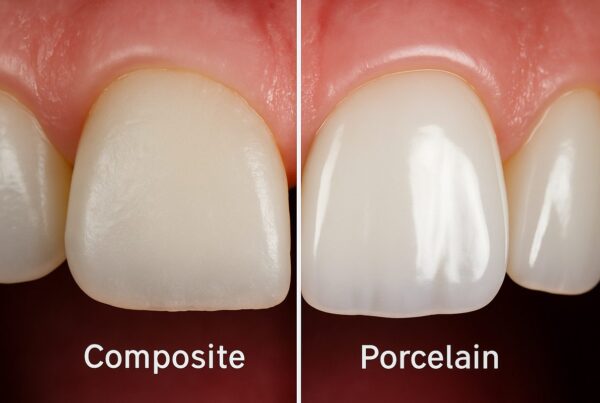
“Turkey teeth” is a popular term, especially in the UK, for a very white, uniform smile made with crowns or veneers at low-cost clinics abroad. The treatment itself is not the problem. Problems arise when healthy teeth are aggressively filed down, cheap materials are used, or the treatment is rushed without proper planning.
Why Do Veneers and Crowns Fail?
Most failed Turkey teeth cases come down to a handful of preventable causes:
- Over-preparation. Healthy teeth are filed into small pegs (“shark teeth”) to fit crowns sold as veneers.
- Poor margins. Gaps between the crown and the tooth trap bacteria and cause decay and gum disease.
- Rushed timelines. Too many teeth are treated in a few days, with no time for the gums or nerves to settle.
- Incorrect bite. Restorations that don’t match the patient’s bite cause chipping, jaw pain and TMJ problems.
- Low-quality materials. Cheaper ceramics can crack, stain or look opaque and artificial.
Signs Your Turkey Teeth Have Gone Wrong
| Symptom | Likely cause | Typical fix |
|---|---|---|
| Constant sensitivity or throbbing pain | Nerve irritation from over-filing | Root canal treatment, then a new crown |
| Red, swollen or bleeding gums | Poorly fitted crown margins | Gum treatment, then replacement crowns |
| Dark line at the gumline | Gum recession or poor margins | New crowns with correct margins |
| Bad breath or a bad taste | Decay or bacteria under the crowns | Remove crowns, treat decay |
| Chipped or cracked veneers | Wrong bite or weak material | Bite correction and stronger ceramics |
| Jaw pain or headaches | Incorrect bite height | Bite analysis and redesigned restorations |
| Bulky, fake-looking smile | Poor smile design | Digital smile design and new crowns |
How Are Failed Veneers and Crowns Revised? (Step by Step)
Step 1: Full diagnosis. The dentist takes panoramic X-rays or a 3D CBCT scan to check for decay, infection, nerve damage and bone loss hidden under the existing crowns.
Step 2: Smile and bite planning. Using digital smile design, the dentist plans the new smile’s shape, size and shade, and corrects the bite before any work begins.
Step 3: Removal of old restorations. The failed veneers or crowns are carefully cut away under local anaesthetic, preserving as much natural tooth as possible.
Step 4: Treating the underlying problems. Decay is removed, infected nerves are treated with root canal therapy, and gum disease is brought under control. Teeth that can’t be saved may be replaced with dental implants.
Step 5: Temporary crowns. Temporaries protect the teeth while the gums heal and let you test the new shape and bite.
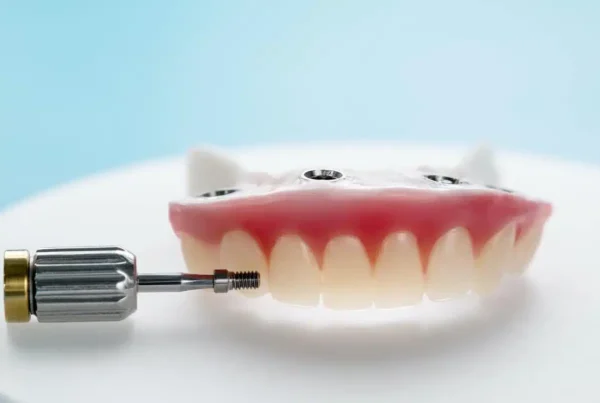
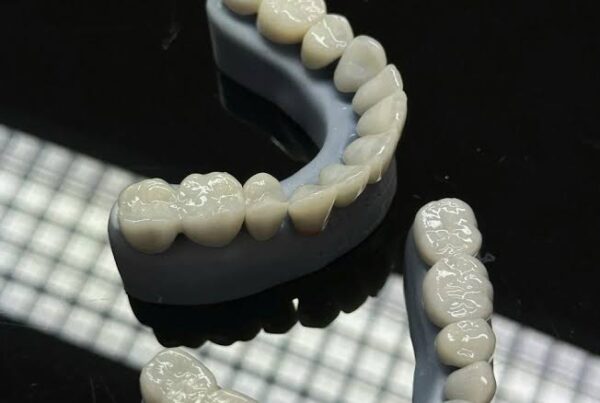
Step 6: Final crowns. New zirconia or E.max crowns are made to precise measurements and bonded in place, followed by a final bite check.
Can Turkey Teeth Be Reversed?
No, Turkey teeth cannot be fully reversed. Enamel that has been filed away does not grow back. The teeth will always need some form of covering. What revision can do is replace poor restorations with healthy, natural-looking ones that protect the remaining tooth structure long term.
How Long Does It Take to Fix Turkey Teeth?
A straightforward crown replacement usually takes 5 to 7 days in the clinic. Cases involving root canal treatment, gum therapy or implants typically need two visits, spaced a few weeks or months apart, to allow proper healing.
How Much Does It Cost to Fix Bad Turkey Teeth?
The cost depends on how many teeth need revision and what treatment each one needs. A simple crown replacement costs less than a case involving root canals, gum treatment or implants. Revision is often more complex than the original treatment, so a detailed examination is essential before any quote is final. For typical prices, see our dental crowns in Turkey cost guide.
How to Avoid a Second Failure
- Ask for X-rays and a written treatment plan before any work starts.
- Confirm the difference between veneers and crowns and exactly how much tooth will be removed.
- Avoid clinics that promise a full smile in 2 to 3 days without assessing your gums and bite.
- Ask about material brands, lab location and guarantees in writing.
Read more in our guide on how to choose a dental clinic in Turkey.
Frequently Asked Questions
Can veneers be removed and replaced?
Yes. Old veneers can be removed and replaced. If the teeth underneath were heavily prepared, full crowns are usually needed instead of new veneers.
Is fixing Turkey teeth painful?
The procedure is done under local anaesthetic, so it shouldn’t be painful. Mild sensitivity for a few days afterwards is normal.
Will I lose my teeth if my crowns are failing?
Not necessarily. Most teeth can be saved with early treatment. Waiting too long allows decay and infection to spread, which increases the risk of extraction.
Can I get my Turkey teeth fixed in Turkey again?
Yes. Many patients choose revision in Turkey at a well-established clinic, as long as they get a proper diagnosis, a realistic timeline and written guarantees.