




Key takeaways
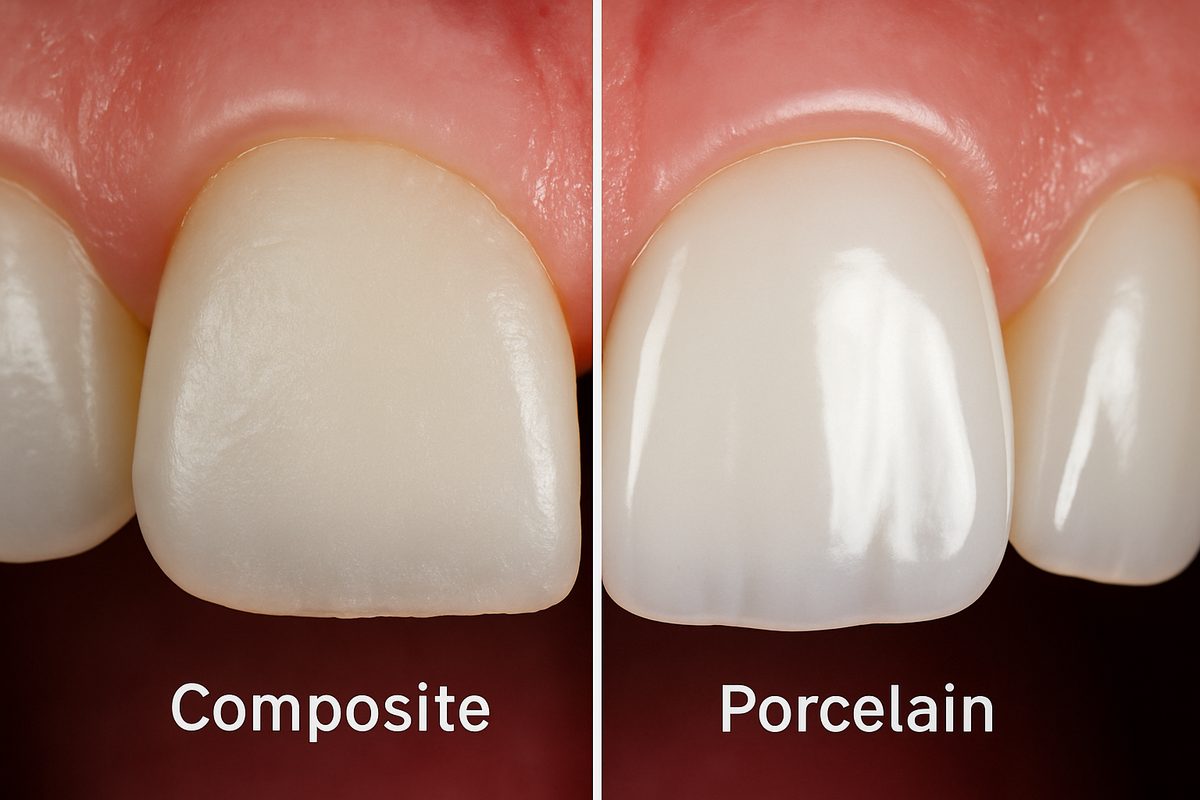
- Composite veneers are tooth-coloured resin sculpted directly onto the teeth in one visit; porcelain veneers are ceramic shells made in a lab and bonded on.
- In Turkey, composite veneers cost £100–£200 per tooth and porcelain (E.max) veneers cost £250–£400 per tooth; UK prices are roughly three times higher.
- Composite veneers last 5–7 years on average; porcelain veneers last 10–15 years.
- Counting travel, a set of 10 E.max veneers in Turkey costs about £310 per year of use, compared with about £350 per year for composite.
- Composite suits small changes, younger patients and anyone who wants little or no drilling; porcelain suits people who want a long-lasting, stain-proof result.
What are composite veneers?
Composite veneers are a thin layer of tooth-coloured resin that a dentist builds up and shapes directly on the front of each tooth. The resin is hardened with a blue light and polished. Usually no or very little enamel is removed, and the whole set is done in one or two visits.
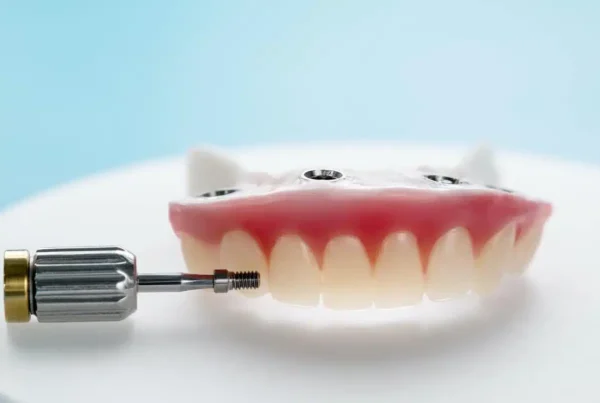
Porcelain veneers are made in a dental lab from ceramic, such as E.max lithium disilicate, and bonded to the teeth at a later visit. They need 0.3–0.7 mm of enamel removed. Read more in our guide to E.max veneers in Turkey.
Composite vs porcelain veneers at a glance
| Composite veneers | Porcelain (E.max) veneers | |
|---|---|---|
| Material | Resin, sculpted in the mouth | Ceramic, made in a lab |
| Price in Turkey (per tooth) | £100–£200 | £250–£400 |
| UK price (per tooth) | £200–£850 | £700–£1,500 |
| Lifespan | 5–7 years | 10–15 years |
| Enamel removed | None to minimal | 0.3–0.7 mm |
| Visits | 1–2 | 2–3 over 5–7 days |
| Stain resistance | Can stain over time | Does not stain |
| Repairable | Yes, easily in the chair | Usually needs replacing |
| Look | Good; can lose shine over years | Most natural; light passes through |
Turkey prices are Dr. Wonder Clinic 2026 ranges. UK prices from published UK price guides checked in October 2026 (Dentists Close By).
How much do composite veneers cost?
Composite veneers cost £100–£200 per tooth in Turkey and £200–£850 per tooth in the UK. Most smile makeovers cover 8–10 upper teeth.
| Number of veneers | Composite in Turkey | Porcelain (E.max) in Turkey | Composite in the UK | Porcelain in the UK |
|---|---|---|---|---|
| 4 (front teeth) | £400–£800 | £1,000–£1,600 | £800–£3,400 | £2,800–£6,000 |
| 8 | £800–£1,600 | £2,000–£3,200 | £1,600–£6,800 | £5,600–£12,000 |
| 10 (upper smile) | £1,000–£2,000 | £2,500–£4,000 | £2,000–£8,500 | £7,000–£15,000 |
The real cost: price per year, including travel
Composite looks cheaper up front, but it is replaced roughly twice as often. For a patient travelling from the UK, every replacement also means another trip.
| Option (10 upper teeth) | Typical total | Travel (one trip) | Typical lifespan | Approx. cost per year |
|---|---|---|---|---|
| Composite in Turkey | £1,500 | £600 | 6 years | £350 |
| E.max in Turkey | £3,250 | £600 | 12.5 years | £310 |
| Composite in the UK | £4,000 | None | 6 years | £670 |
| E.max in the UK | £9,500 | None | 12.5 years | £760 |
Dr. Wonder Clinic calculation using mid-point prices and mid-point lifespans, October 2026. Travel assumes return flights and hotel from the UK. Your own figures will vary.
For UK patients travelling to Turkey, porcelain is usually the better value over time. For patients who live near the clinic, or who want a reversible first step, composite remains the cheaper option per year.
How long do composite veneers last?
Composite veneers last 5–7 years on average, and up to 10 years with careful maintenance. Their main weakness is wear: the resin slowly loses its shine, picks up stains from coffee, tea, red wine and smoking, and its edges can chip.
The upside is that composite can be repaired. A chipped edge or a dull surface can often be fixed or re-polished in one short visit, without replacing the whole veneer. See How Long Do Veneers Last? for aftercare tips.
Composite bonding vs composite veneers
Both use the same resin, but they cover different amounts of tooth:
- Composite bonding repairs a small area, such as a chipped corner or a small gap, on one or a few teeth.
- Composite veneers cover the whole front surface of each tooth, usually across 6–10 teeth, to change colour and shape.
If you only need a small fix, bonding is quicker and cheaper. See Composite Bonding in Turkey: Prices.
Which should you choose?
Choose composite veneers if:
- you want little or no drilling and a reversible first step;
- you only need small changes to shape or colour;
- you are young and want to delay porcelain for a few years;
- your budget today is limited.
Choose porcelain veneers if:
- you want the most natural look and no staining;
- you want 10–15 years before replacement;
- you are travelling from the UK and want to avoid repeat trips;
- you need bigger changes to colour, shape or alignment.
Not sure which one fits your teeth? A digital smile design shows both options on your own smile before you decide.
[Dentist name: add one first-hand clinic figure here, for example the split between composite and porcelain veneer patients in 2026, or the average age of each group, with sample size.]
Frequently asked questions
Are composite veneers worth it?
Yes, for small changes and for people who want to avoid drilling. For a long-lasting result, especially if you travel for treatment, porcelain usually costs less per year.
Do composite veneers damage your teeth?
Composite veneers usually need little or no enamel removal, so they are among the least invasive options. They can be removed or replaced later without major damage.
Can composite veneers be whitened?
No. The resin does not respond to whitening gel. If you want whiter teeth, whiten first and match the composite to the new shade.
Can you replace composite veneers with porcelain later?
Yes. Many patients start with composite and switch to porcelain later. The dentist removes the composite and prepares the teeth for porcelain.
How long does it take to get composite veneers in Turkey?
A full set of composite veneers is usually done in 1–2 days. Porcelain veneers need 5–7 days because they are made in a lab.
Do composite veneers look fake?
Not when they are well done. Problems usually come from choosing a shade that is too bright or from thick layers that make teeth look bulky.